


Identifying the requirements of any industrial project starts with reviewing the pipes needed and their specifications. Nominal size alone is not enough to order the right product: the manufacturing method, wall thickness, steel grade, finish, and connection method are all part of the information engineers and procurement teams rely on when checking a bill of quantities.
Types of steel pipes include seamless and welded products, as well as pipes with different surface finishes to suit project requirements. In this guide, we explain the differences between these types, their main industrial applications, methods of corrosion protection, connection options, and how to select the associated fittings.
What Are Iron and Steel Pipes, and How Are They Made?
Pipes commonly described as iron pipes may be manufactured from steel or cast iron, using processes that create a hollow body. The characteristics of the finished product depend on its material composition, production process, heat treatment, and dimensions. Pipes intended to carry liquids and gases also have different requirements from hollow sections used in structures and fabrication.
Welded pipes begin as steel strip or plate that is formed until its edges meet and are welded together. Seamless pipes, by contrast, are made from a solid steel billet that is pierced, elongated, and sized to achieve the required diameter and wall thickness.
Subsequent operations include preparing the ends, inspecting the product, and applying identification markings. Their sequence varies with the specification and manufacturing process, after which the pipes are prepared for shipment in accordance with packaging and protection requirements.
The production method explains some of the differences between types of steel pipes, but identifying the final product also requires information about the material grade, surface finish, inspection results, and accompanying documentation.
Types of Steel Pipes
Steel pipes can be classified in several ways. Some names describe the condition of the surface, whereas others refer to how the pipe body was manufactured. The main types can be understood as follows:
1. Black Steel Pipes
Black steel pipes are non-galvanized steel pipes. They are available in both welded and seamless versions, so the name alone does not identify the manufacturing process, material grade, or wall thickness.
Some products are supplied without a coating, while others have oil or varnish for temporary protection during storage and transportation. The required surface condition should be specified when it affects subsequent preparation or coating work.
An order for black steel pipes therefore needs a complete technical description. The external color does not prove that two products are equivalent or establish their suitability for a particular industrial application.
To understand the differences in protection and applications, read our article on the differences between black steel pipes and galvanized steel pipes.
2. Galvanized Steel Pipes
Galvanized pipes have a zinc layer covering the steel surface. The application method varies by product: some pipes are galvanized after fabrication, while other sections are formed from previously galvanized strip.
The method affects coverage of the surfaces, weld area, and ends. For this reason, the galvanizing method and applicable standard should be reviewed rather than relying on a shiny appearance alone.
Galvanizing describes the surface finish and does not replace the need to identify the steel properties or manufacturing method. Zinc coating requirements and inspection procedures should also be stated in the purchasing documentation when required.
3. Welded Steel Pipes
Welded pipes are manufactured by forming flat steel into a hollow section and joining its edges. Welding processes and available size ranges vary, and the weld seam may run straight along the pipe or follow a spiral around its body.
ERW stands for Electric Resistance Welding, LSAW for Longitudinal Submerged Arc Welding, and SSAW for Spiral Submerged Arc Welding.
Each method is subject to production and inspection requirements appropriate to the product and its specification. The project should define which methods are acceptable rather than treating all welded pipes as a single product.
4. Seamless Steel Pipes
Seamless pipes are formed without joining the edges of a strip or plate along a weld seam. They then undergo the necessary sizing, treatment, and finishing processes.
They are available in a variety of material grades, standards, and wall thicknesses, with different end preparations, such as plain or beveled ends, depending on the supply item and intended assembly method.
Like other types of steel pipes, seamless products require inspections and documentation confirming compliance. The absence of a weld seam does not mean all seamless pipes are identical or exempt from quality requirements.
Difference Between Seamless and Welded Pipes
The main difference lies in the starting material and production steps. Seamless pipes are formed from a solid billet, while welded pipes are made from steel strip or plate whose edges are joined by welding.
The manufacturing method affects available diameter and wall-thickness ranges, cost, and inspection procedures. Some welding methods allow the production of large diameters that can be difficult to achieve with conventional seamless production methods.
Reviewing a welded product includes the characteristics of the weld zone and the inspections specified for it. For seamless pipes, the focus is on body integrity, dimensions, and required tolerances. In both cases, the applicable standard determines acceptance criteria.
The selection between types of steel pipes is ultimately based on the approved design and specifications. A higher price alone does not make one product suitable, and the presence of a weld seam does not disqualify another without reviewing its properties.
For a closer look at the technical differences and selection criteria, read our guide to the differences between seamless and welded pipes.
Main Uses of Steel Pipes in Industrial Projects
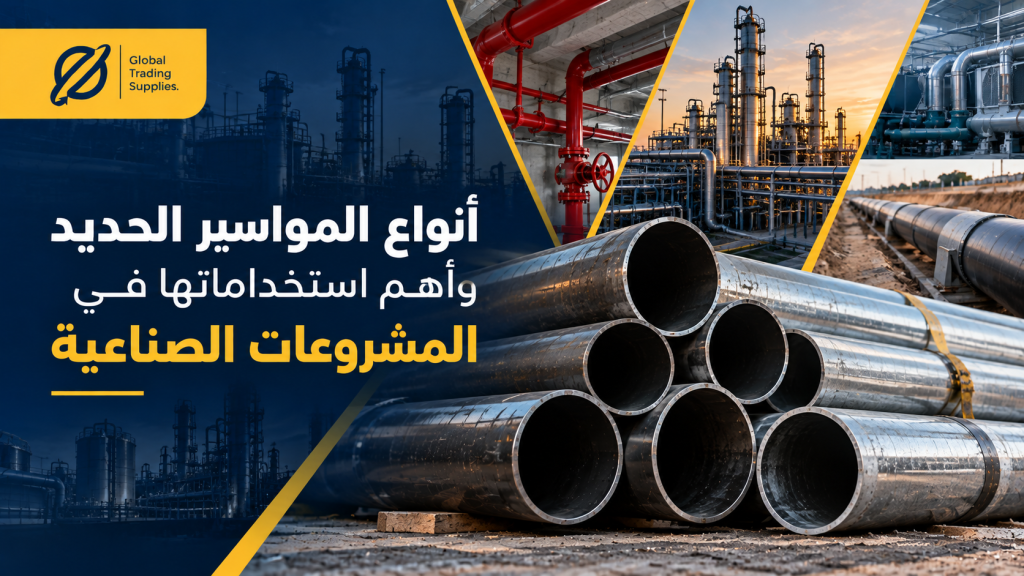
Steel pipes are used in many types of projects, which differ in the substances being conveyed, operating temperature and pressure, and approval requirements. Key applications include:
1. Fire Protection Systems
Steel pipes are used in parts of fire protection networks, including main lines and connections within facilities. Pipe type, wall thickness, and connection method are specified according to the network design, applicable code, and project requirements.
Pipes, fittings, and flanges must satisfy any approvals specified for the project. Technical documents are also reviewed before procurement to confirm compatibility among the required items.
2. Oil and Gas Pipelines
Steel pipes are used in oil and gas transmission lines and related operating systems inside industrial facilities. Requirements vary according to the conveyed material, pressure, and temperature.
The standard, material grade, production method, and tests are determined by the pipeline design. Protection, traceability, and documentation requirements must be checked before approving a product for supply.
3. HVAC and Cooling Systems
Steel pipes are used in some heating, ventilation, air-conditioning, and cooling systems, including chilled-water lines and equipment connections. The appropriate product depends on the operating medium and system design.
Wall thickness, joining method, and external insulation affect line preparation. Contractors must also coordinate pipe, fitting, and flange sizes with the approved drawings.
4. Water Networks and Infrastructure
Steel pipes are used in some water lines, pumping stations, and infrastructure projects. Their selection depends on design requirements, installation conditions, and the necessary protective systems.
Lining, coating, and joint specifications are reviewed for the intended application. The suitability of materials in contact with drinking water must be established through the documentation and requirements applicable to the project.
To learn about materials used in different water applications, see our guide to types of pipes used in water networks.
5. Industrial Piping Lines
Factories have lines carrying water, steam, compressed air, and fluids used in production processes. Each system requires pipes and components suitable for its operating conditions.
Reviewing temperature, pressure, material grade, and documentation helps determine the required product, whether seamless carbon steel pipes or other products specified by the project.
For more information about the properties of these pipes and their industrial applications, read our article on carbon steel pipes and their uses.
How Do You Protect Steel Pipes from Rust and Corrosion?
Pipe protection must suit the environment in contact with both its internal and external surfaces. Installation location and the nature of the conveyed material affect the protection required. Common methods include:
1. Galvanizing
Galvanizing provides a zinc layer on the pipe surface. It is suitable for certain applications in which the project specifies a galvanized finish, such as components exposed to moisture or outdoor conditions.
The galvanizing method, standard, and areas requiring protection must be defined. The suitability of zinc for the operating conditions and surrounding medium should also be reviewed before approving the product.
2. External Paints and Coatings
Protective paints and coatings are applied to the external surface after preparation in accordance with the specified coating system. The material, number of coats, and required coating thickness vary with the surrounding environment.
Different coating systems are used for exposed, buried, or industrial piping. Surface cleaning and application quality influence protection performance over the service life.
3. Internal Linings
An internal lining is applied when the conveyed material must be separated from the pipe surface or when its effect on the surface needs to be reduced. Lining material and inspection requirements vary by application.
Drinking-water lines require linings suitable and approved for their intended use, while chemical compatibility and operating temperatures must be reviewed for industrial systems before selecting a material.
4. Cathodic Protection
Cathodic protection is used on some buried or submerged pipelines as part of a corrosion-control system. It is designed according to site conditions and the properties of the soil or surrounding medium.
The system requires specialist design and monitoring, and its requirements are coordinated with the external coating specified for the project.
5. Pipe Inspection and Condition Monitoring
Inspecting coatings, linings, and connection areas helps identify damage before it spreads. Inspection programs also allow operators to assess pipeline condition and plan maintenance.
Inspection methods and intervals vary according to the risks and operating conditions. A monitoring plan should therefore be tailored to each system rather than applying one schedule to all pipelines.
Steel Pipe Connection Methods and Main Fittings
Piping networks require a suitable joining method for each section, followed by the selection of compatible fittings and flanges based on pipe type and design specifications. The main connection methods are:
1. Welded Connections
Welded connections are used to join pipe sections and fittings, including elbows, tees, reducers, and caps. Joint dimensions, material, and wall thickness are selected according to the line requirements.
Welding work requires qualified procedures and personnel, along with any inspections specified by the project. Pipe and fitting end preparations must also match before installation.
2. Threaded Connections
Threaded joining relies on compatible threads on the pipe and its fitting. Common fittings include couplings, elbows, tees, and plugs, selected according to thread type, size, and standard.
Suitability is determined by the application and design requirements. Thread form, operating conditions, and permitted sealing materials must be checked before assembly.
3. Flanged Connections
Flanges connect pipes to valves, pumps, and equipment, or create joints that can be dismantled for maintenance. A flanged assembly consists of two flanges, a gasket, and suitable bolts.
An order must specify the flange type, size, material, pressure class, facing, and standard. Bore compatibility must also be checked when using weld-neck flanges.
Global Trading Supplies (GTS) supplies threaded fittings, high-pressure fittings, seamless butt-weld fittings, and flanges. The bill of quantities can be reviewed to identify the items and specifications required before procurement.
Steel Pipe Sizes and Wall Thicknesses
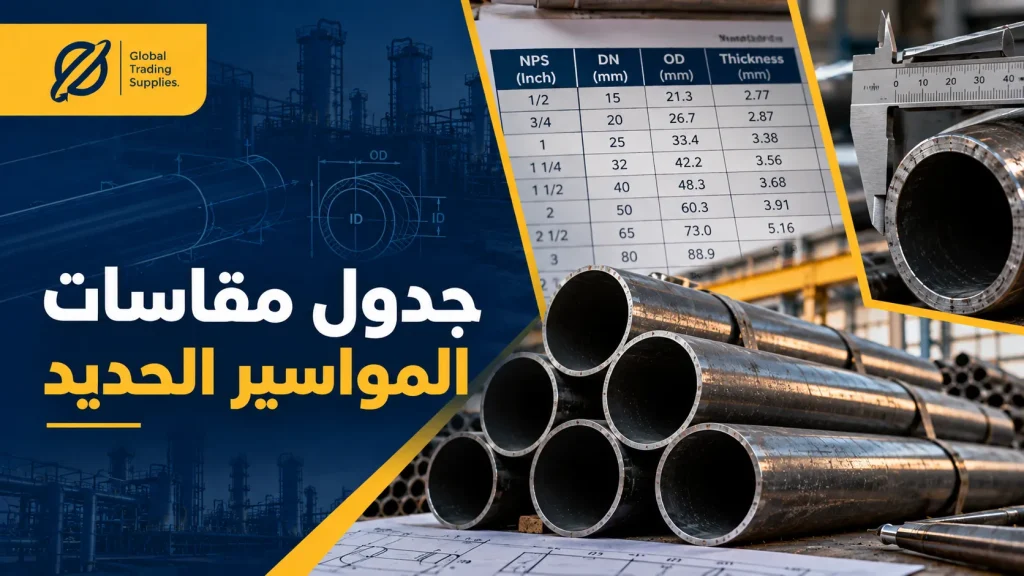
Steel pipe dimensions are expressed in inches and millimeters. It is important to distinguish nominal pipe size, outside diameter, and inside diameter because these refer to different measurements.
To identify the correct diameters and wall thicknesses for your project, consult our steel pipe size chart before ordering.
A 2-inch pipe illustrates the distinction: its outside diameter is approximately 60.3 mm in common steel pipe dimensional series, while its inside diameter changes with wall thickness.
A Schedule number refers to a series of wall thicknesses associated with each nominal size. Schedule 40 does not mean a thickness of 40 mm, nor does the number represent one fixed operating pressure for every pipe. The following table shows examples of common nominal dimensions:
| Nominal size | Outside diameter | Schedule 40 wall thickness | Schedule 80 wall thickness |
|---|---|---|---|
| 1 inch | 33.4 mm | 3.38 mm | 4.55 mm |
| 2 inches | 60.3 mm | 3.91 mm | 5.54 mm |
| 4 inches | 114.3 mm | 6.02 mm | 8.56 mm |
Calculating Pipe Weight per Linear Meter
Theoretical weight helps estimate an order's mass and review transportation costs and preliminary calculations. For round carbon steel pipes, the weight per meter can be estimated using the outside diameter and wall thickness in millimeters:
Approximate weight (kg/m) = 0.02466 × wall thickness × (outside diameter − wall thickness).
A pipe with an outside diameter of 60.3 mm and a wall thickness of 3.91 mm has a theoretical weight of approximately 5.44 kg per meter. A 6-meter length therefore weighs about 32.6 kg.
This estimate covers the pipe body only; it excludes any galvanizing, coating, or couplings. Actual weight is also affected by permitted manufacturing tolerances.
To understand how wall thickness affects weight and dimensions, see the differences between Schedule 40 and Schedule 80 pipes.
Manufacturer tables and contractual terms should be used to approve supply weights, since differences between theoretical and actual weight must be evaluated against specification tolerances and the agreed basis of sale.
Common Pipe Standards and Specifications
Standards for steel pipes vary by product and application. It is important to distinguish the product specification, material grade, and dimensional standard. The following examples illustrate their roles:
1. ASTM A53
This specification covers certain black and galvanized steel pipe products, including welded and seamless types. Orders must therefore state the type and grade in addition to the specification number.
2. ASTM A106
This specification covers seamless carbon steel pipes for high-temperature service and includes different material grades. A complete purchase description also needs the size, wall thickness, and other supply requirements.
3. API 5L
This specification covers line pipe with various grades and product specification levels. Stating only “API” is not sufficient, as grade and specification level add important requirements.
4. ASTM A500
This specification covers round and other shapes of structural steel hollow sections. It illustrates why structural products should be distinguished from pipes governed by other industrial service specifications.
5. ASME B36.10
This standard covers dimensions of welded and seamless wrought steel pipes. It is used to check diameters and wall thicknesses but does not, on its own, establish material grades or all product acceptance tests.
How Steel Pipe Types Affect Pricing
The cost of steel pipes in Egypt depends on product specifications and terms of supply. Reviewing the following factors helps explain differences between quotations:
1. Manufacturing Method
Forming, welding, seamless production, heat treatment, and inspection all contribute to cost. The differences vary with pipe size, quantities, and product availability.
2. Standard and Material Grade
Material properties, testing, and documentation requirements affect cost. Technically equivalent products should therefore be compared instead of relying on a shortened trade name.
3. Wall Thickness, Length, and Weight
A longer or thicker pipe contains more steel. Prices also depend on whether the quotation is per piece, meter, or tonne, so the comparison unit should be standardized.
4. Country of Origin, Finish, and End Preparation
Production, shipping, galvanizing, painting, and end-preparation costs affect the order value. Additional documents and inspections may also increase costs when required.
5. Delivery and Payment Terms
Quotations differ in whether transportation, loading, taxes, and delivery dates are included. Price validity and payment terms must be reviewed before choosing a supplier.
Source Seamless Pipes and Fittings for Your Project with GTS
Industrial pipe procurement starts with reviewing the bill of quantities and defining the required specifications before approving a quotation. Global Trading Supplies (GTS) can help source seamless carbon steel pipes and piping components for your project.
Its product range includes pipes of Ukrainian, Russian, and Chinese origin, along with threaded fittings, high-pressure fittings, seamless butt-weld fittings, and flanges. You can submit your list of required items to ask about available sizes, technical documentation, and delivery schedules.
Providing the following details makes your procurement request easier to review:
- Pipe type, standard, and material grade.
- Nominal size, wall-thickness schedule, length, and quantity.
- Fitting or flange type, sizes, and specifications.
- Country of origin and required technical documentation.
- Delivery location and target delivery date.
Conclusion
Steel pipe types differ in manufacturing method, properties, and finish. Selecting a suitable product means checking the standard, material grade, dimensions, wall thickness, and operating conditions, then specifying the appropriate protection and connections for each part of the network.
Reviewing the bill of quantities and technical documentation before purchasing helps teams compare quotations accurately and gives engineers, contractors, and procurement managers the information needed to match supply items to project requirements.
Frequently Asked Questions
What Is the Difference Between Iron Pipes and Steel Pipes?
The term “iron pipes” is often used to refer to pipes made of steel, while the technical description identifies the material and its grade. Cast iron differs from steel in composition, manufacturing methods, and properties.
Can Seamless Pipes Be Galvanized?
Yes. “Seamless” describes how the pipe body is manufactured, while “galvanized” refers to a zinc coating on the surface. A product can be both seamless and galvanized.
How Can I Tell a Seamless Pipe from a Welded Pipe?
Check the product markings, mill test certificate, and product description. Do not rely on visual inspection alone, as surface finishing can make a weld seam less visible without changing the manufacturing method.
What Does Schedule 40 Mean for Steel Pipes?
Schedule 40 refers to a series of wall thicknesses that vary with nominal pipe size. It does not mean one fixed thickness or operating pressure. Check the relevant dimensional table for the actual thickness.
How Do I Calculate Pipe Weight per Meter?
Use the outside diameter and wall thickness in the formula for the weight of round pipes, or consult the manufacturer's table. Multiply the weight per meter by the pipe length to estimate the total weight.
Why Can Two Pipes of the Same Size Have Different Prices?
Price differences may result from wall thickness, length, material grade, standard, manufacturing method, origin, and finish. Transport and delivery terms also matter, so compare the full specification for each product.