


Accepting a pipeline involves more than checking dimensions and material type. The integrity of assembled sections and joints must be verified before the network is put into service, and test results must be recorded in accordance with the project’s approved specifications so engineers, contractors, and quality personnel can assess the line and decide whether to accept it.
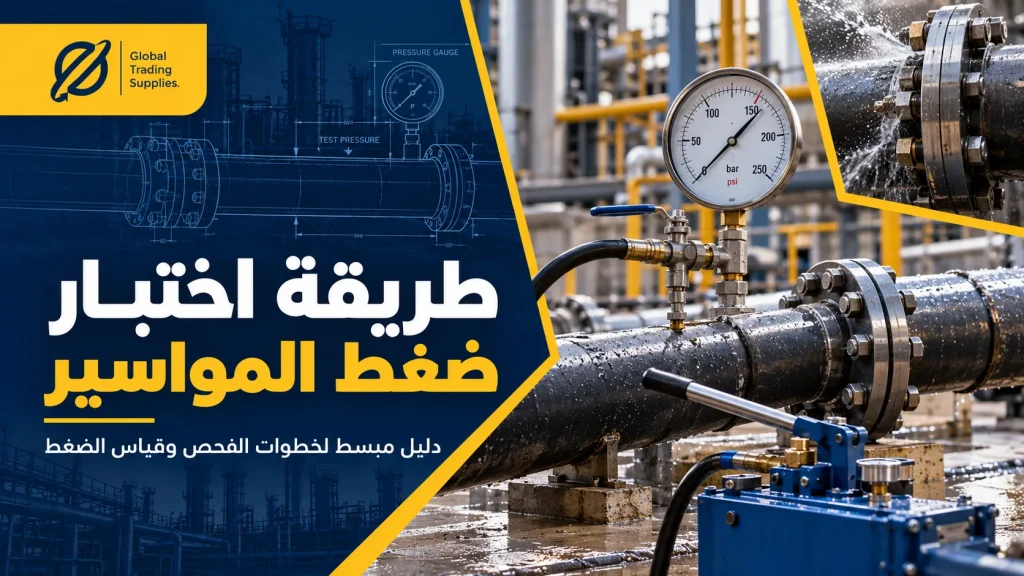
The appropriate pipe pressure testing method depends on the network, the medium it carries, and the design requirements. Water or air may be used under an approved technical procedure. This guide explains the differences between the two methods, when testing is required, and the key stages of the process.
What Is Pipe Pressure Testing?
Pipe pressure testing is performed to verify that a test section can withstand the pressure specified in the project procedure, assess joint tightness, and identify leaks or defects that become apparent during testing.
A strength test serves a different purpose from a leak-tightness test. Testing an individual pipe at the factory also differs from testing a network after installation: factory testing concerns the product under its standard, while site testing covers the pipes, joints, flanges, and other components within the test boundary.
A manufacturer’s test certificate helps verify the delivered pipe, but it does not by itself establish the quality of joints assembled on site. Network tests must therefore follow the project drawings and approved acceptance procedures.
For information about pipe products used in fire protection systems, see our guide to types of pipes used in fire protection networks.
When Should Pipe Pressure Tests Be Performed?
The timing of a pipe pressure test is established in the execution and acceptance plan. It varies with the type of line, stage of installation, and accessibility of joints. The following situations typically require review of the testing procedure:
1. After Installing a Section of the Network
The designated section is tested once the required assembly and inspections are complete and the joints, supports, and test arrangements are ready, in accordance with the approved test limits.
2. Before Covering Sections That Need Inspection
Backfilling, insulation, and covering work should be scheduled so the necessary inspections can be carried out while joints remain accessible, subject to the project’s requirements for anchoring and backfilling.
3. After Repairs or Changes to the Line
After a leak has been repaired or a joint modified, the need to retest the affected section must be assessed. The scope and method of retesting are determined by the quality plan and project specifications.
4. Before Network Handover and Commissioning
Test results, observations, and documentation are reviewed during acceptance. The network is then restored and prepared for operation under the approved plan.
Water Pressure Testing of Pipes
Water pressure testing applies a specified pressure to the test section using water as the test medium. Also known as hydrostatic testing, it is used to assess the behavior of the line and its joints under the approved test conditions.
The suitability of water must be checked against the pipe material, linings, and connected equipment. Water quality, disposal, cleaning, and drying requirements depend on the service and the particular line.
To understand the properties of different materials and their suitability for each application, read our guide to types of pipes used in water supply networks.
Liquid testing is generally preferred when suitable and practicable because, under comparable conditions, a liquid stores less energy than compressed gas. Safety and pressure-control precautions are still necessary for the pressure and network volume involved.
A hydrostatic pipe pressure test forms part of a broader inspection plan that also covers the test boundaries, the components exposed to pressure, and the acceptance criteria.
How to Pressure Test Water Pipes
Water pipe pressure testing requires a written procedure defining the scope of work and the responsibilities for testing and inspection. The following stages describe what the qualified team reviews under the test plan:
1. Define the Test Boundaries and Review Drawings
The engineer defines the section to be tested, its starting and ending points, and the components within it. They review the drawings, line list, and isolation requirements and identify equipment that needs to be protected or disconnected under the approved procedure.
The pressure ratings of pipes, fittings, flanges, valves, and temporary equipment are checked to confirm their suitability for the test conditions before the network is prepared.
To learn about the essential components and fittings used in fire protection systems, see our guide to fire protection system components.
2. Prepare the Line and Secure Its Ends
The team verifies that the joints and supports are complete and that filling, venting, and draining points are ready. Suitable end closures are installed and secured in accordance with the technical plan.
Forces acting on end closures and changes in direction must be considered. The test area, barriers, and safe exclusion distances are established before pressure is applied.
3. Inspect the Test Equipment
The test pump, pressure gauges, hoses, and protective devices are inspected. The instruments’ condition, calibration, and measuring range are checked so the required pressure can be monitored under the procedure.
The gauge location and the method for recording readings are specified, accounting for differences in elevation and hydrostatic head in lines with high and low points.
4. Fill the Line and Vent Trapped Air
The network is filled with the specified test medium, and trapped air is released at designated points. Air pockets can affect the response and pressure readings of the line and increase its stored energy.
Vent locations are reviewed against the network design, and the team confirms that the line is ready before proceeding to the pressure application stage.
5. Monitor the Test and Inspect the Line
The hydrostatic pressure test is carried out using the pressure, duration, and monitoring stages prescribed by the approved procedure. Readings and observations are recorded under the project plan.
Joints and designated components are inspected only under the permitted inspection conditions. Any defects are addressed using safe work procedures after pressure is isolated, released, and confirmed to be absent before repairs begin.
To choose threaded fittings that meet network requirements, learn how to select threaded fittings for fire protection systems.
6. Depressurize and Restore the Line
Pressure is reduced and the test medium is drained according to the plan. Temporary arrangements are removed, disconnected components are reinstated, and any required cleaning or drying is completed.
Reinstatement records are checked before the line is handed over to the next stage, ensuring that no temporary plug or connection remains in the operating system.
Air Pressure Testing of Pipes
Air pressure testing uses compressed gas as the test medium. It may be considered when water is impractical or unsuitable for the line, such as for certain systems sensitive to residual moisture, subject to the specifications and a risk assessment.
Pneumatic testing differs from hydrostatic testing in stored energy. Compressed gas can release a large amount of energy if a network component fails, so air pressure tests require additional safeguards, an approved procedure, and qualified personnel.
Preparations include reviewing the test section volume, pressure limits, temporary components, exclusion zone, barriers, and overpressure protection. Conditions for approaching and inspecting the line are also established by the applicable procedure.
Air testing is not an automatic substitute for water testing, and test pressures or durations must not be transferred from one network to another. Materials, standards, system types, and safety requirements differ between projects.
Water vs. Air Pressure Testing: Key Differences
Comparing water and air pressure tests helps explain the requirements of each method before preparing the inspection plan:
| Comparison | Water Pressure Test | Air Pressure Test |
|---|---|---|
| Test medium | Water appropriate for the system | Compressed air under the approved procedure |
| Method selection | Used when the network and project procedures permit it | Considered after reviewing suitability, risks, and project requirements |
| Stored energy | Relatively lower under comparable conditions | Higher due to gas compressibility |
| Line preparation | Includes filling, venting, and drainage checks | Includes risk assessment, exclusion zones, and pressure controls |
| After testing | Drainage and drying or cleaning as needed | Restore the line in accordance with the project plan |
On mobile, swipe the table horizontally to view all columns when needed.
How Many Bar Should a Water Pipe Pressure Test Use?
There is no single pressure in bar that applies to every pipe pressure test. The required pressure is determined by the adopted code, network type and materials, design pressure, temperature, and the ratings of the components within the test boundary.
To understand the relationship between operating pressure and pipe specifications, read our guide to selecting pipes based on operating pressure.
Pipelines at different elevations must account for hydrostatic head so that the pressure at specified points is verified without exceeding any component’s permitted limits.
The pressure for a hydrostatic or pneumatic pipe test must be specified and approved by the responsible project authorities before work begins, including gauge location, allowable limits, and inspection stages.
The test pressure must be reviewed against the ratings of pipes, fittings, flanges, valves, end closures, and instruments. A single component’s nominal rating does not automatically permit the same pressure for the entire assembly.
To understand differences in wall thickness and their impact on pipe specifications, explore the differences between Schedule 40 and Schedule 80 pipes.
Pipe Pressure Test Duration
The duration of a pipe pressure test depends on the approved technical reference, the type of line, and the purpose of testing. A procedure may have separate stages for filling, stabilization, pressurization, and inspection, each with its own requirements.
For hydrostatic testing, the line conditions and water and ambient temperatures must be considered when evaluating readings. Pneumatic testing must account for changes in gas temperature and their effect on the recorded pressure.
No fixed test duration applies to every line. The start and end of the monitoring period and the criteria for evaluating readings should be specified in the approved test form before testing begins.
Factors Affecting Water Pipe Pressure Test Results
Reviewing test conditions helps interpret pressure readings and identify the cause of variations. The technical team considers factors such as:
1. Temperature Changes
Changes in the temperature of the test medium and surrounding environment affect pressure readings. Conditions are therefore recorded and considered when evaluating changes during monitoring.
2. Trapped Air Inside the Line
Air pockets can influence a network’s response during hydrostatic testing. Vent points must be checked in accordance with the line design and test procedure.
3. Condition of Measuring Instruments
Gauge calibration, measuring range, condition, and location affect the quality of readings. Instruments are checked before testing and their details recorded in the report.
4. Temporary Test Equipment
A leak may originate in a hose, temporary fitting, or test plug. The inspection therefore includes the temporary equipment within the test boundary, under the approved safety procedures.
5. Changes in Elevation
Liquid pressure varies with elevation. A line running between different levels requires defined measuring points and corresponding pressures in its test plan.
Prepare Your Project’s Pipe Network with GTS
Preparing a pipeline for service begins with sourcing products that match the bill of quantities and specifications. Global Trading Supplies (GTS) supplies seamless carbon steel pipes and related piping products for engineering and industrial projects in Egypt.
The company offers pipes of Ukrainian, Russian, and Chinese origin, alongside threaded fittings, high-pressure fittings, seamless butt-weld fittings, and flanges.
Engineers, contractors, and procurement teams can submit a bill of quantities and inquire about technical documents and product availability, helping them review supply information before installation and testing.
Conclusion
Pipe pressure testing helps assess the condition of a test section and its joints before acceptance. Its value depends on defining the test limits, medium, pressure, duration, and acceptance criteria in accordance with the project documents.
Hydrostatic and pneumatic pipe pressure tests require equipment, qualified teams, and procedures appropriate to each method. Documenting readings, repairs, and approved results remains an essential part of the network quality record.
Frequently Asked Questions
How Long Does a Pipe Pressure Test Take?
The duration depends on the network type, code, and testing purpose. The monitoring period and test stages are defined in the project’s approved procedure.
How Many Bar Are Required for a Water Pipe Pressure Test?
The value is determined by the project specification, design pressure, component ratings, and test conditions. No single pressure applies to every network.
What Is the Difference Between Water and Air Pressure Tests?
Hydrostatic testing uses water as the pressurizing medium, while pneumatic testing uses compressed gas. Pneumatic testing requires additional risk assessment and safeguards because of the energy stored in gas.
Does a Pressure Drop Always Mean There Is a Leak?
A pressure drop requires review of test conditions, including temperature, gauge condition, temporary equipment, and trapped air, alongside checking for possible leaks under the approved procedure.
Can All Pipes Be Pressure Tested with Air?
Whether pneumatic testing is permitted depends on the pipe type, manufacturer’s instructions, code, specifications, and risk assessment. Air must not be used without reviewing and approving these requirements.
Does Factory Testing Replace Testing After Installation?
A factory certificate covers the product and its tests under the product standard. Site testing examines the assembled network and joints. Each type of test is defined by the project requirements.