


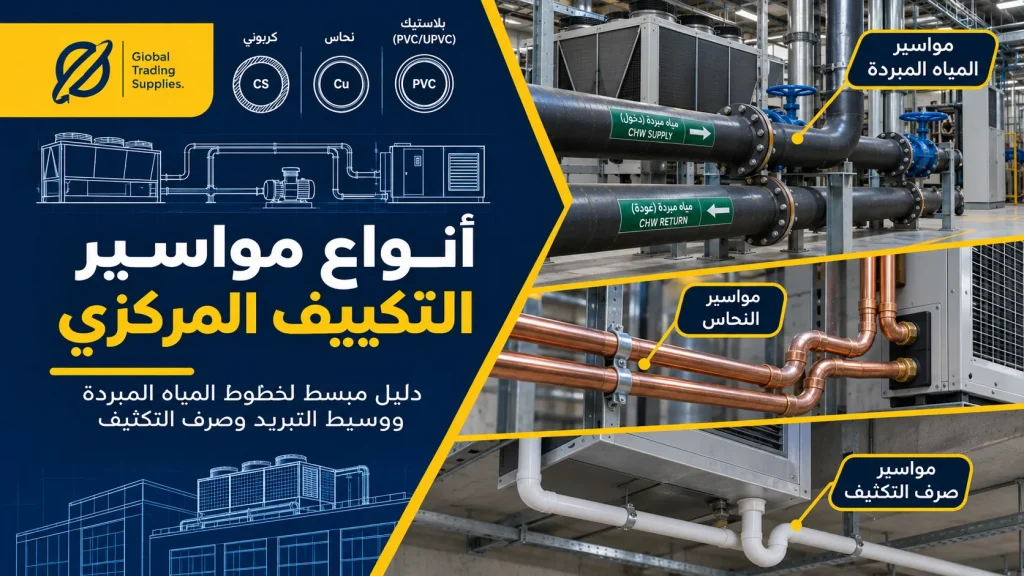
Central air conditioning projects include pipework serving different purposes. Some pipes carry chilled water between the chiller and building units, while others carry refrigerant or drain condensate. Each line requires a material, size, and connections compatible with its design and operating conditions.
Understanding the types of central air conditioning pipes helps engineers, contractors, and procurement teams interpret bills of quantities and check materials before ordering. This guide covers the main pipe applications, differences between HVAC circuits, carbon steel pipe specifications and fittings, and the factors that affect material selection for a project.
Types of Central Air Conditioning Pipes
Central air conditioning pipe types vary according to the function of the line and the fluid it carries. The appropriate product is therefore selected after reviewing the system type, drawings, and approved specifications. The following materials are used in certain HVAC applications:
1. Steel Pipes
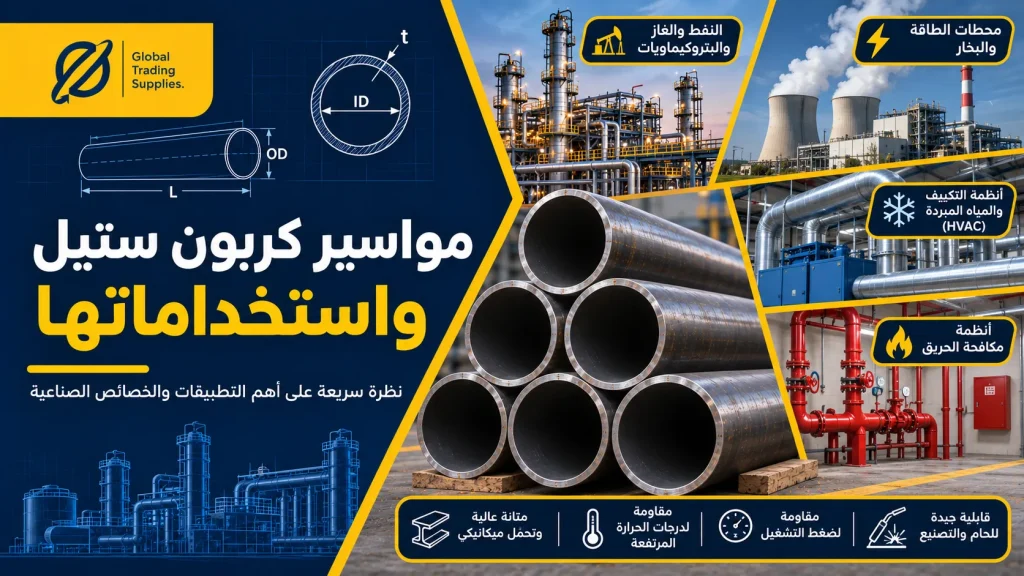
Carbon steel pipes are used in some chilled-water and condenser-water circuits in central HVAC projects. Both seamless and welded products are available, and the project specification determines which type is required.
The pipe grade, nominal size, wall thickness, and end preparation must be checked. Surface protection, insulation, and jointing requirements are also specified according to the installation location and service conditions.
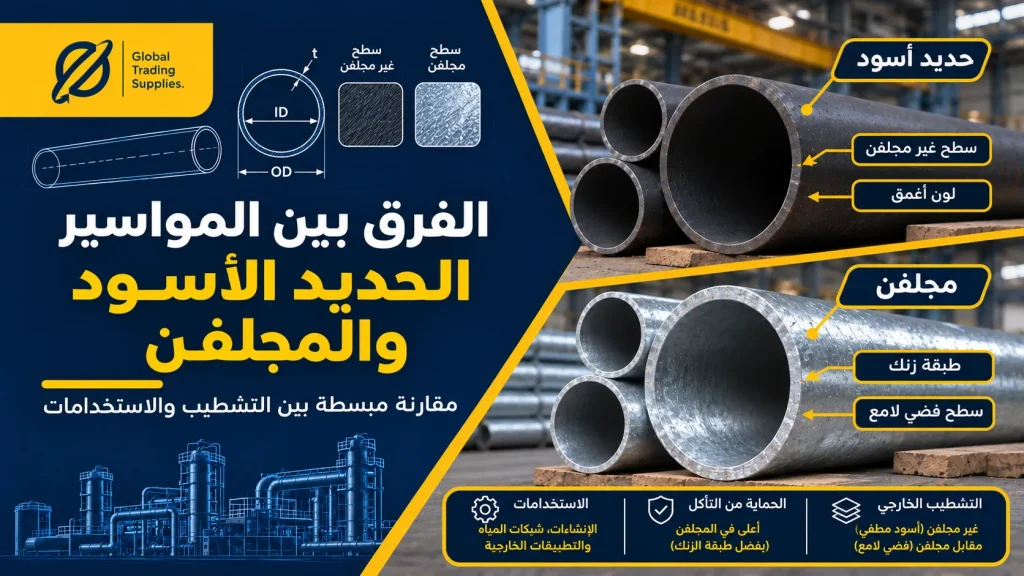
To understand how galvanizing and surface finish affect pipe selection, read our guide to black vs. galvanized steel pipes.
Seamless carbon steel pipes are among the products GTS offers for engineering projects. Their acceptance in an HVAC network must be checked against the line design and required documentation.
2. Copper Pipes
Refrigeration-grade copper tubes are commonly used in refrigerant lines, including those in certain direct-expansion and variable refrigerant flow (VRF) systems. They may also be used in water applications where the project specifications permit.
Refrigerant lines require clean, dry tubes compatible with the refrigerant and the design pressure. Their size, wall thickness, and joining method are determined by the equipment manufacturer's instructions and the applicable code.
Using copper in one part of a system does not mean it is required in every HVAC circuit; each line has its own function and technical requirements.
3. Plastic Pipes
Certain plastic pipes are used for condensate drainage. Some chilled-water designs also allow pressure-rated nonmetallic piping products, subject to the product specification and operating conditions.
Drainage pipes must be distinguished from pressure pipes. Similar material or color does not make the products suitable for the same purpose. Temperature limits, pressure rating, joining method, supports, and insulation also need to be checked.
A product should only be approved after verifying its compliance with the project specifications and manufacturer's instructions, without assuming that all plastic pipes are suitable for chilled-water circuits.
Chilled Water Pipes
Chilled water pipes carry cooled water from a chiller to air-handling units or terminal HVAC units. After absorbing heat, the water returns to the chiller to be cooled again, according to the system configuration approved for the project.
The network includes supply and return lines, as well as branches connected to equipment. The designer specifies diameters, valves, fittings, supports, and insulation requirements based on calculations and drawings.
Carbon steel is one of the materials used in some chilled-water networks. The choice between seamless and welded pipes depends on the project specification, and using one type in a particular line does not mean that every part of the system has the same requirements.
The type of water and any additives, treatment needs, and corrosion protection must also be reviewed in accordance with equipment instructions and approved specifications.
Differences Between Chilled Water, Refrigerant, and Condensate Drain Pipes
Different central air conditioning pipe systems serve different functions. The following comparison helps distinguish the circuits when reading drawings and preparing the material list:
| Line Type | Function | Example Materials, Subject to Design | Details to Check Before Ordering |
|---|---|---|---|
| Chilled Water | Carries water from the chiller to HVAC units and back | Carbon steel, copper, or purpose-designed nonmetallic products | Material, diameter, wall thickness, pressure, insulation |
| Refrigerant | Carries refrigerant between refrigeration system components | Refrigeration-grade copper tubing in many systems | Refrigerant type, diameter, wall thickness, cleanliness, joining method |
| Condensate Drainage | Drains water collected from air conditioning units | Project-approved drainage products, including some plastic pipes | Diameter, slope, insulation, discharge point requirements |
To view all columns on a mobile device, swipe horizontally within the table as needed.
Carbon Steel Pipes for Central Air Conditioning
Carbon steel pipes are specified in some central HVAC projects for main water lines and branches. The project determines the pipe standard, grade, manufacturing method, and wall thickness.
Seamless pipes may be required in certain bills of quantities, while other projects accept welded products under the approved design. Suppliers therefore need the precise specification for each item before preparing a quotation.
To learn about manufacturing methods and the characteristics of different products, see our guide to types of steel pipes.
Temperature, design pressure, fluid type, and installation environment affect product selection. Requirements for joint inspection, testing, and insulation are set by the project code and equipment instructions.
Pipe documents must be checked for compliance with the specified requirements; the term carbon steel alone is not a complete product description.
Central Air Conditioning Pipe Specifications
Technical specifications help standardize central HVAC pipe details before a bill of quantities is issued and supplier quotations are compared. The engineering and procurement teams should review the following:
1. Product Standard and Material Grade
Specify the pipe standard and material grade exactly as stated in the project documents, then check the required mill certificates for the product.
Seamless pipes can have different requirements from certain welded products, so the manufacturing method must be stated explicitly whenever it is specified.
2. Nominal Size and Wall Thickness
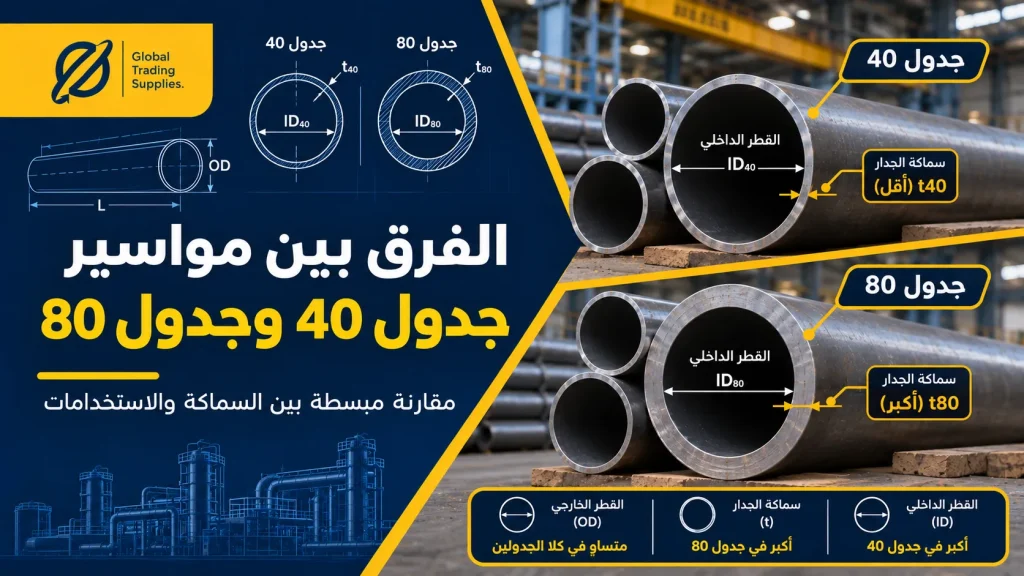
Pipe sizes and wall thicknesses are defined in the drawings and material list according to design calculations. Check the nominal size and either the required pipe schedule or specified wall thickness for each item.
To check diameters and wall thicknesses before preparing your bill of quantities, refer to our steel pipe size chart.
Reviewing lengths, quantities, and pricing units helps produce supplier offers that can be compared on the same basis.
3. Pressure and Temperature
Pipes, fittings, flanges, and valves must all be suitable for the approved design conditions. The rating of each component should also be checked at the required temperature.
Pressure can vary across different sections of a network, particularly in high-rise buildings, as determined by the project calculations.
For the technical factors used to select suitable pipes, see our guide to choosing pipes according to operating pressure.
4. Documentation and Inspection
Specify mill test certificates, country-of-origin documents, traceability details, and any additional inspection requirements in the purchase request. Then match the documents to the delivered products.
Receiving inspections include checking product identification, surface condition, and dimensions under the quality plan before the pipes are approved for installation.
Chilled Water Pipes: Material, Diameter, and Insulation
Selecting chilled water pipes involves pipe material, diameter, and insulation requirements. These factors affect procurement and installation coordination, and each must be reviewed separately against the approved design:
1. Selecting the Pipe Material
The material is selected based on the fluid, design pressure, installation location, corrosion requirements, and joining method. Options may include carbon steel or other materials allowed by the project specifications.
Material compatibility must be considered where pipes connect to equipment and components made from different materials. Water treatment and protection requirements are determined according to the system conditions.
2. Determining Pipe Diameter
The design engineer determines the diameter from flow rate, fluid velocity, pressure losses, and equipment requirements, then confirms sizes in the drawings and material list.
The pipe designation alone is not enough to select the diameter; branches serving individual units also require assessment according to the network design.
3. Selecting Thermal Insulation
Suitable insulation helps reduce heat gain and limits condensation on the outer surfaces of pipes. Its material and thickness are specified according to line temperature, humidity, and project requirements.
Joints, valves, flanges, and supports need insulation details that match the design, so connection points do not become locations where moisture accumulates.
4. Protecting the Insulation Layer
Requirements for sealing insulation joints and limiting water-vapor ingress must be checked. An external protective layer may also be specified where the pipe is exposed to weather or mechanical damage.
Insulation work is coordinated with inspections, testing, and support installation according to the approved construction sequence.
Central Air Conditioning Pipe Fittings and Accessories
Water-based HVAC networks need fittings to change the direction of pipework, create branches, and connect equipment. The type, material, size, and rating of each fitting are defined by the drawings and specifications. Key components include:
1. Welded Fittings
Welded fittings include elbows, tees, reducers, and other components listed in the bill of materials. They connect sections of pipework, change direction, or form branches.
The fitting's material, standard, size, wall thickness, and end preparation must be checked to ensure compatibility with the pipe and approved welding procedure.
For joining methods and installation requirements, read our guide to steel pipe connection methods.
2. Threaded Fittings
Threaded fittings are used in parts of a system where project specifications allow them. The thread type, nominal size, material, rating, and connected components must be specified.
Requirements for threaded connections vary with network design, pipe wall thickness, and the applicable code, so they must be checked before the fittings are approved.
3. Flanges
Flanges connect pipework to valves, pumps, and certain equipment. They also allow assemblies to be dismantled for maintenance when the design calls for it.
A flange order should specify its type, size, material, pressure class, facing, and standard, along with the appropriate gasket and bolts.
4. Equipment Connection Components
Connections to chillers, pumps, and HVAC units require coordination of flange, coupling, and other component dimensions against the project drawings and equipment instructions.
Reviewing these interfaces before procurement helps identify the correct sizes and prevents discrepancies between the material list and equipment connections.
To compare joining options and components for different applications, see our guide to types of pipe fittings and connections.
Inspecting HVAC Pipes Before Installation
Receiving inspections for central air conditioning pipes begin by matching delivered products to purchase orders and approved specifications, followed by checking quantities, lengths, surface condition, and pipe-end preparation.
Identification markings and mill certificates are examined as required by the project. Any issues with coatings, protective caps, or damage during transport and storage should also be recorded.
Pipes, fittings, and flanges must be stored to keep them clean and protect their ends from damage, in accordance with manufacturer instructions and the site's storage plan.
System tests are carried out after installation under the approved procedure and code. This is a separate stage from reviewing pipe certificates when materials arrive.
Carbon Steel Pipe Supply for Central HVAC Projects from GTS
Central HVAC projects need pipes and fittings that match the approved material list and specifications. Global Trading Supplies (GTS) receives inquiries for seamless carbon steel pipes, fittings, and flanges for engineering projects in Egypt.
The company offers pipes of Ukrainian, Russian, and Chinese origin, as well as threaded fittings, high-pressure fittings, seamless butt-weld fittings, and flanges. Engineers, contractors, and procurement officers can submit bills of quantities to inquire about available products and technical documentation.
Reviewing pipe sizes, wall thicknesses, lengths, quantities, and fitting specifications helps prepare an offer that matches the required pipework. Delivery dates and documentation are confirmed when the request is reviewed.
Conclusion
Central air conditioning pipe types vary according to each circuit's function, the fluid being carried, and the design conditions. Selecting the right product requires checking material, size, wall thickness, joining method, insulation, and the necessary documentation.
Matching drawings and material lists with supply information helps ensure the network components meet project requirements. It also gives installation and procurement teams a clear basis for reviewing pipes and fittings before installation.
Frequently Asked Questions
What types of pipes are used in central air conditioning systems?
They include carbon steel, copper, and certain purpose-designed nonmetallic pipes. Their use depends on whether the line carries chilled water, refrigerant, or condensate drainage.
Are carbon steel pipes used in chilled water systems?
Yes. Certain carbon steel pipe products are used in some chilled water networks. The pipe type, specifications, and joining method are determined by the project design.
What is the difference between chilled water pipes and refrigerant pipes?
Chilled water pipes circulate water through a hydronic system, while refrigerant pipes carry the working refrigerant in the cooling cycle. Material, pressure, cleanliness, and joining requirements differ between the two lines.
Are seamless pipes suitable for central air conditioning systems?
Seamless pipes can be used in certain HVAC lines when the project specifications permit them and the material, dimensions, and design conditions are suitable. The engineer determines the required product for each line.
Why do chilled water pipes need insulation?
Suitable insulation reduces heat gain and limits condensation on pipe surfaces. The insulation material, thickness, and installation details are specified according to the project conditions.
Which fittings and flanges are used in HVAC pipe networks?
Components include elbows, tees, reducers, welded or threaded fittings, and flanges. Their type, size, material, and rating are selected to match the network design and connected equipment.