On this page
- Types of Water Well Pipes
- Well Pipe Materials and How Their Uses Differ
- Seamless Carbon Steel Pipes for Well Projects
- What Determines the Right Well Pipe?
- Differences Between Riser Pipes, Casing Pipes and Well Screens
- Well Pipe Connections and Related Components
- Source Pipes for Your Well Project from GTS
- Conclusion
- Frequently Asked Questions
Equipping a water well requires pipes that perform different functions. Some pipes line the borehole, others allow groundwater to enter from the aquifer, and others connect to the pump to lift water and deliver it to the project’s network. Selecting each component depends on the well design, ground conditions, water quality, and operating requirements.
Understanding the types of water well pipes helps engineers, contractors, and procurement teams interpret the bill of quantities and define each item before purchasing. This guide explains the main well pipe types, their functions within the well, and the differences between their materials.
Types of Water Well Pipes
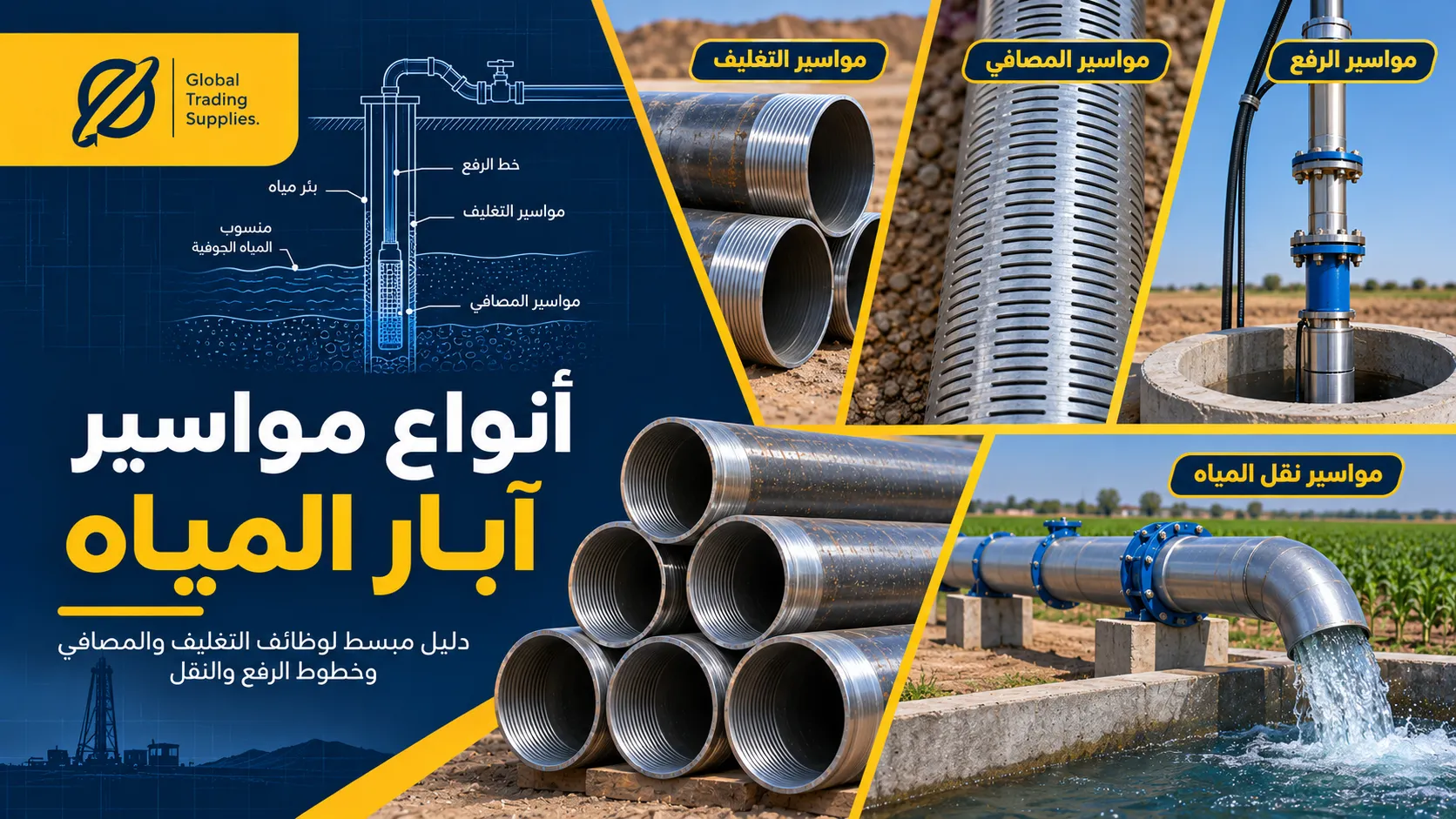
The types of water well pipes vary according to their location and function. The purpose of each pipe must therefore be identified before selecting the material, diameter, and wall thickness. The following components are commonly specified in well projects:
1. Well Casing Pipes
Well casing is installed inside the borehole according to the design. It supports selected sections of the borehole and separates designated surrounding strata. It also forms part of the well protection system that limits the entry of unwanted water or contaminants from other zones.
Casing length, diameter, wall thickness, and material depend on well depth, geological formations, drilling method, and the design of the seal around the casing.
To avoid confusion when specifying dimensions, read our guide to the difference between nominal pipe diameter and outside diameter.
Casing joints must meet the project’s specifications. Selecting the pipe alone is not sufficient without checking how casing lengths are connected and whether the assembled string can withstand installation and service loads.
2. Well Screens
Well screens are installed at the designated water-entry interval within the aquifer. Their openings allow water to pass while limiting the entry of soil particles and sand in accordance with the well design.
A specialist determines screen type, length, diameter, and slot size based on aquifer properties, particle-size distribution, and required flow rate. The need for a suitable gravel pack around the screen must also be reviewed.
A well screen is different from plain casing. The function, number of lengths, and installation intervals of each item must be specified instead of using one generic description for all well components.
3. Water Riser Pipes
Riser pipes connect to the pump and carry water from the pump setting inside the well to the wellhead or a surface collection point. Pipe length and diameter depend on pump installation depth and the required discharge rate.
These pipes and their connections must be checked for loads due to the weight of the assembly and pumping conditions, as well as operating pressure, the method of suspending the pipe string, and its connection to the pump and surface equipment.
Material, wall thickness, and joining method are selected according to the project design and pump manufacturer’s instructions. Material compatibility with the water and corrosion protection requirements must also be reviewed.
4. Water Transmission Pipes Outside the Well
A transmission line begins at the well outlet and carries water to a storage tank, irrigation network, treatment plant, or another destination specified by the project.
The line is selected based on flow rate, pressure, length, elevation difference, and installation conditions. Pipes, valves, flanges, and fittings are specified according to approved drawings and calculations.
Surface or buried transmission pipes must be distinguished from riser pipes inside the well, as their loads, installation methods, and technical requirements may differ.
For suitable materials for water transmission and distribution lines, see our guide to types of pipes used in water supply networks.
Well Pipe Materials and How Their Uses Differ
Water well pipes are available in several materials. Their suitability depends on the intended function, product characteristics, and project specifications. The designer may consider the following options:
1. Carbon Steel Pipes
Carbon steel pipes are used in some well applications, riser lines, and transmission lines when the specifications permit them. They are available in different dimensions, wall thicknesses, and grades.
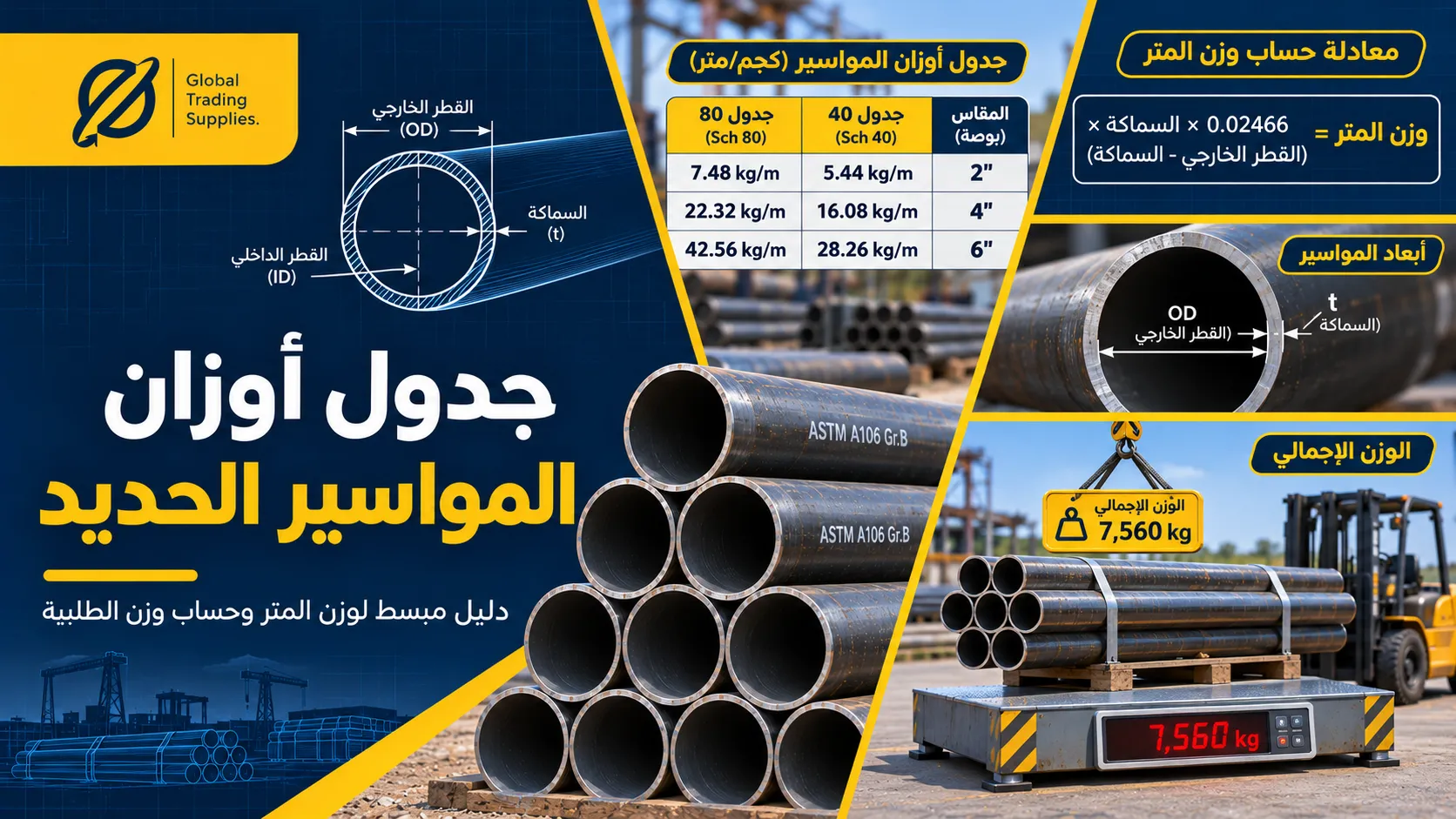
To check diameters and wall thicknesses before preparing a bill of quantities, refer to our steel pipe size chart.
Corrosion risk must be evaluated using water and soil analyses and operating conditions. The required protection method, corrosion allowance, and inspection requirements are then determined by the line design.
The pipe specification, manufacturing method, end preparation, and connection type must all be stated rather than simply requesting “iron pipes for wells.”
2. Plastic Pipes Designed for Wells
Certain plastic pipes specifically designed for well applications may be used as casing, screens, or water lines when their product specifications and the well design permit that function.
Load-bearing capability varies with material, dimensions, and manufacturing method. Wall thickness, product rating, manufacturer’s instructions, and installation conditions must therefore be checked.
A similar plastic material does not automatically make another product interchangeable: casing, screens, and pressure pipes can be subject to different requirements.
3. Stainless Steel Pipes
Certain stainless steel products are used in some well components, screens, or connections where water conditions and the design call for a suitable material. Their corrosion resistance varies with grade and environment.
Selecting the grade requires checking water analysis, corrosion and scaling risks, material and fitting costs, and connection requirements before approval.
Suitability for the intended application must be established from product specifications and documentation; not all stainless steel grades behave alike in every environment.
4. Galvanized Steel Pipes
Some galvanized steel pipe products may be used in well applications when the design permits them. The compatibility of the zinc coating with the water quality and intended service must be assessed.
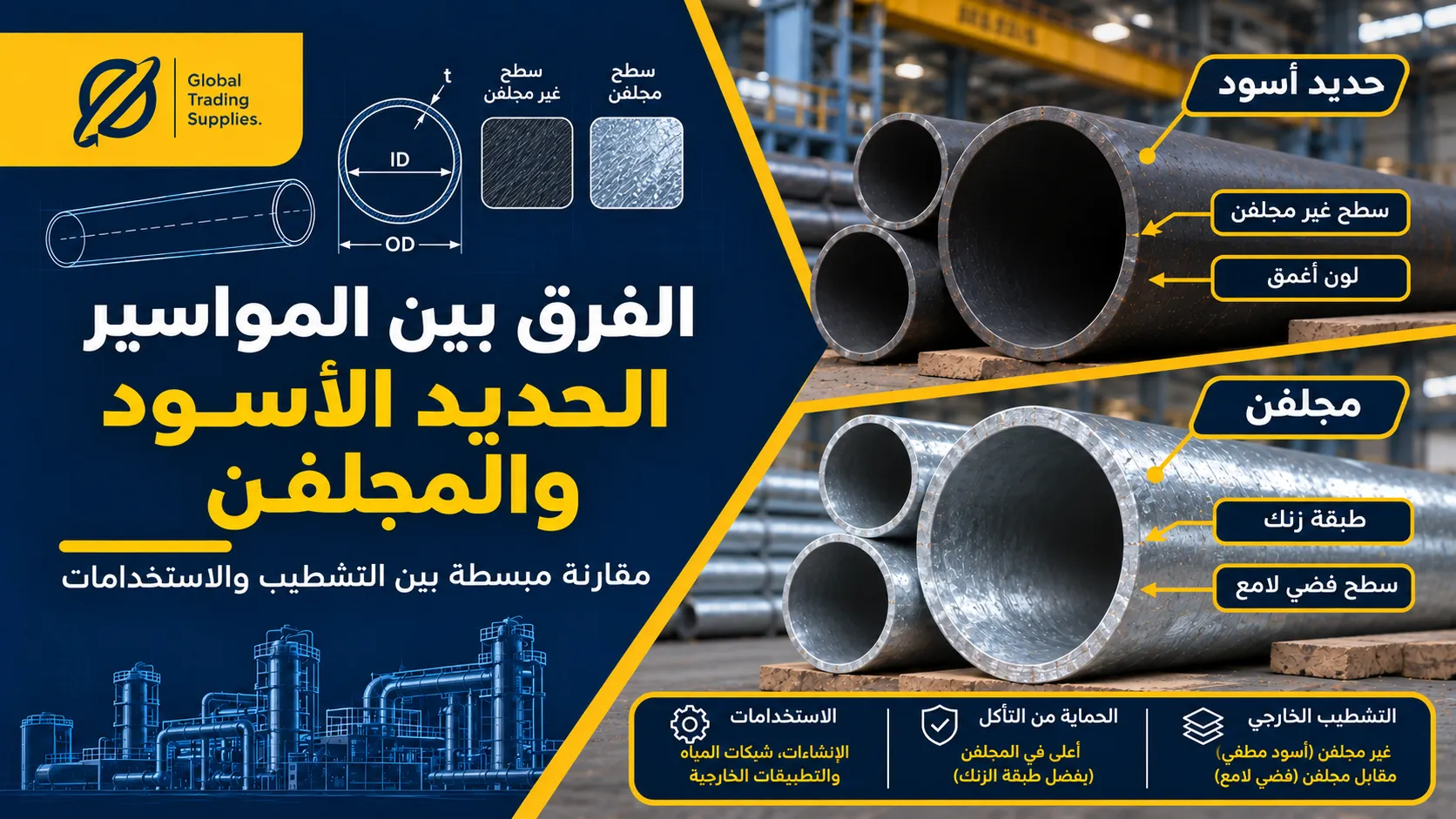
To understand the differences in surface finish and protection, read black steel vs. galvanized steel pipes.
Joining and end preparation affect protection requirements where the coating is cut or damaged. The project defines the appropriate repair and inspection procedures.
Seamless Carbon Steel Pipes for Well Projects
Seamless carbon steel pipes are used in some water riser and transmission lines associated with well projects when the specifications permit them. Material grade, diameter, wall thickness, and joining method are defined by the line design.
GTS supplies seamless carbon steel pipes for engineering projects. Engineers and contractors can review the applicable product specification and documentation to confirm that a pipe meets the relevant project item.
Using a pipe inside a well requires assessing installation conditions, loads, water quality, and protection requirements. The suitability of the joints and the capacity of the complete assembly must also be checked against the design.
Seamless pipes are not automatic substitutes for well screens or specialized casing, as each component serves a different purpose and is governed by its own project requirements.
What Determines the Right Well Pipe?
Selecting suitable water well pipes requires reviewing the well design and site information before preparing the bill of quantities. The following factors help define each product:
1. Pipe Function and Location
First determine whether the item is intended for casing, screening, water lifting, or transmission beyond the wellhead. Then check its position and the required length.
This prevents confusion between pipes that look alike but differ in openings, connections, or design loads.
2. Well Depth and Pump Setting Level
Well depth and pump setting position affect riser length, assembly weight, and the method used to lower and secure the equipment. Elevation differences also form part of pumping calculations.
The design must identify the loads and the installation and maintenance conditions so that suitable pipes and joints can be selected.
3. Geological Formations
Soil and surrounding strata influence casing requirements, screen design, and sealing around the well. Selection relies on the geological information available for the project.
Screen intervals and slot sizes must match aquifer characteristics and particle-size analysis, rather than assuming one slot size is suitable for every well.
4. Water Quality
Water analysis helps assess corrosion and scaling risks and pipe material suitability. Requirements can differ depending on whether the water is used for drinking, irrigation, or industrial processes.
Materials in contact with drinking water and their documentation must comply with applicable requirements. The designer also determines whether additional protection or a different material is necessary.
5. Required Flow Rate and Pressure
The diameter of riser and transmission pipes is determined using pump flow rate, pressure losses, pipeline length, and connected components. Start-up and shutdown conditions and design pressures must also be reviewed.
Pipes, joints, flanges, and valves must have ratings compatible with the design so the complete assembly meets the line requirements.
For a better understanding of pressure and pipe specifications, consult our guide to selecting pipes based on operating pressure.
6. Installation and Maintenance Method
The method of lowering the pump and connecting riser lengths affects joint selection and end preparation. The project must also allow for dismantling the riser and lifting the pump for maintenance when necessary.
Installation, handling, and securing procedures are defined by the qualified project team according to equipment instructions and project specifications.
Differences Between Riser Pipes, Casing Pipes and Well Screens
Distinguishing the functions of water well pipe types makes it easier to review the bill of quantities and define the required information for each item. The table below summarizes the main differences:
| Component | Main function | Information to review when selecting |
|---|---|---|
| Well casing | Support designated borehole sections and separate strata as specified | Diameter, wall thickness, material, length and connections |
| Well screens | Allow water entry while reducing soil particle ingress | Screen location, length, slot size and material |
| Riser pipes | Carry water from the pump to the wellhead | Pump depth, diameter, pressure, loads and joints |
| Transmission pipes | Carry water from the wellhead to its destination | Flow rate, pressure, line length and installation location |
On mobile devices, scroll the table horizontally to view all columns.
Well Pipe Connections and Related Components
Well lines require joints that connect pipe lengths to the pump and other system components. Connection type depends on location, design loads, and project specifications. The following items should be reviewed:
1. Threaded Connections
Threaded connections are used where the pipe and pump specifications permit them. The thread type, size, material, and required sealing method must be specified.
The joint’s ability to withstand design loads on the riser string must be verified, and thread condition checked before installation according to project procedures.
2. Flanges
Flanges are used at designated connection points to pumps, equipment, or surface lines. Flange type, size, material, pressure class, and facing are specified in the bill of quantities.
The assembly requires gaskets and bolts suitable for service conditions. Its dimensions and compatibility with connected equipment must also be checked.
3. Welded Fittings
Welded fittings are used on lines whose approved design calls for welded connections. They include fittings needed to change direction, branch the line, or transition between sizes.
Fitting material, size, wall thickness, and end preparation must be specified. Welding and inspection are carried out under approved procedures by qualified personnel.
4. Special Pump Connection Components
The connections between the pump, riser, and wellhead require checking the dimensions and components identified in project drawings and equipment instructions.
Checking pump and connection data before procurement helps identify the required dimensions, connection types, and transition fittings for each item.
For connection options and fittings used in water lines, see our guide to types of water pipe fittings.
Source Pipes for Your Well Project from GTS
Well projects require pipes and fittings that match the bill of quantities and line specifications. Global Trading Supplies (GTS) receives enquiries for seamless carbon steel pipes, fittings, and flanges for engineering and industrial projects in Egypt.
Reviewing each line’s function, diameter, wall thickness, quantity, and required connections helps prepare an appropriate quotation. Product suitability for a particular installation is established through project specifications and review by the responsible technical team.
Conclusion
Selecting water well pipe types begins with defining each component’s function inside and outside the well, followed by reviewing materials, dimensions, and connections in light of well depth, water quality, pump design, and operating conditions.
An accurate bill of quantities distinguishes casing, screens, risers, and transmission lines, giving the project team the information needed to compare quotations and documentation before approving procurement.
Frequently Asked Questions
What Are the Types of Water Well Pipes?
These include well casing pipes, screens, water riser pipes, and transmission lines beyond the wellhead. Material and specifications vary with the function of each component and the project design.
What Is the Difference Between a Well Casing Pipe and a Riser Pipe?
Casing supports designated sections of the borehole and separates strata as required by the design, whereas a riser pipe carries water from the pump to the wellhead.
What Is the Function of Water Well Screens?
Screens allow water to enter the well from the aquifer. Their designed openings help limit the entry of soil particles and sand.
Can Seamless Pipes Be Used for Well Riser Lines?
They can be used in certain riser lines when the project specifications permit them, after reviewing material, wall thickness, joints, loads, water quality, and protection requirements.
How Does Water Salinity Affect Pipe Material Selection?
Water salinity and chemical composition are factors in assessing corrosion and scaling risks. Water analysis and operating conditions must be reviewed before selecting the material and appropriate protection.
What Information Is Needed to Specify Deep-Well Pump Pipes?
The required information includes pump setting depth, flow rate, design pressure, connection size, riser length, loads, water quality, installation method, and applicable specifications.