On this page
- Differences Between Seamless and Welded Pipes
- What Are Seamless Pipes?
- What Are Welded Pipes?
- Common Standards for Steel Pipes
- Installation and Testing of Seamless Pipes
- Inspecting Weld Seams in Welded Pipes
- Industrial Uses of Seamless Pipes
- How to Choose the Right Seamless Pipes
- Seamless Carbon Steel Pipes and Fittings from GTS
- Conclusion
- Frequently Asked Questions
Comparing pipe supply quotations starts with details beyond size and price. A project’s bill of quantities may specify seamless pipes for one line and welded pipes for another, each with its own standard, material grade, testing requirements, and documentation. Understanding these details helps engineers, contractors, and procurement teams select the correct product before approval.
The main difference between seamless and welded pipes lies in how the pipe body is made, whether it has a weld seam, and how it must be inspected. Choosing the right type, however, depends on system design and operating conditions. This guide explains the differences and how to select pipes that meet your project’s requirements.
Differences Between Seamless and Welded Pipes
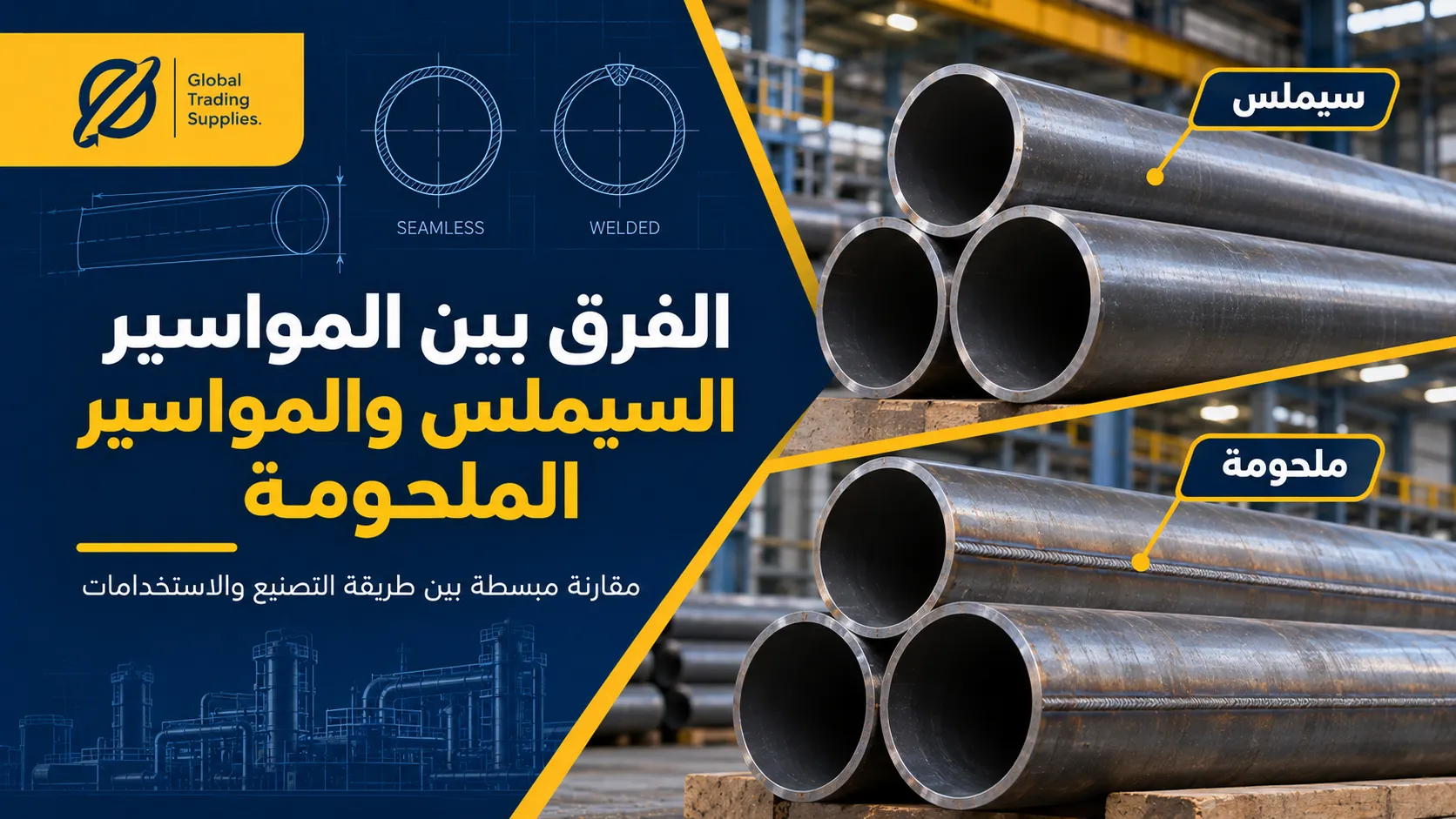
Seamless pipes are manufactured without a weld seam along the pipe body, whereas welded pipes are formed from flat steel whose edges are joined by longitudinal or spiral welding. The applicable product standard sets the manufacturing and inspection requirements for each type.
The following table compares seamless and welded pipes based on factors that matter to project teams:
| Comparison factor | Seamless pipes | Welded pipes |
|---|---|---|
| Pipe-body manufacturing | A solid steel billet is formed into a hollow pipe | Steel strip or plate is formed and its edges welded |
| Weld seam in the pipe body | No weld seam created when forming the body | Longitudinal or spiral seam, depending on the process |
| Inspection | Material, dimensions, and body integrity are checked under the standard | Material, dimensions, body, and weld seam are checked under the standard |
| Available sizes | Vary by manufacturer and production method | Vary by welding method and manufacturer |
| Applications | Depend on material, thickness, code, and service conditions | Depend on material, thickness, code, and service conditions |
| Procurement decision | Based on the item description and required documents | Based on the item description and required documents |
On mobile devices, swipe horizontally to see all table columns.
What Are Seamless Pipes?
Seamless pipes are manufactured without a longitudinal or spiral weld seam created by joining the edges of flat steel. They are available in different materials, grades, and dimensions according to the relevant standard and application.
GTS supplies seamless carbon steel pipes for engineering and industrial projects. When requesting a quotation, specify the product standard, material grade, size, wall thickness, length, quantity, origin, and required documents.
“Seamless” describes how the pipe body is manufactured. It does not, by itself, establish an allowable operating pressure, temperature, or suitability for every fluid. These requirements must be checked against the piping design and the specified product’s properties.
What Are Welded Pipes?
Welded pipes are produced from steel strip or plate formed into a circular section, with the edges joined by a welding process suited to the manufacturing requirements. Production and inspection details vary by pipe type and standard.
Some welded pipes have a longitudinal weld seam, while others have a spiral seam. Required test results for the body and weld zone are reviewed against the manufacturer’s documentation and the project’s inspection plan.
One important distinction is that “seamless” refers to the manufacture of the pipe itself. A seamless pipe can still be welded to a fitting or flange during installation, provided the project’s approved welding procedure is followed.
Common Standards for Steel Pipes
A product standard establishes manufacturing and inspection requirements, while the material grade identifies properties within that standard. Procurement teams therefore need to specify the pipe type, grade, size, and wall thickness rather than relying on the standard number alone. The following examples help explain the standards used when comparing seamless and welded pipes:
1. ASTM A53
ASTM A53 covers certain welded and seamless steel pipes. The manufacturing type and required grade must therefore be stated in the purchase item.
Specifying the type prevents confusion between two quotations that reference the same standard but involve different manufacturing methods.
2. ASTM A106
ASTM A106 covers seamless carbon steel pipes intended for high-temperature service and includes several material grades. A complete purchase description also includes the dimensions, wall thickness, lengths, and other project requirements.
Citing this standard alone does not automatically make a product suitable for every application. The piping design, applicable code, and required service temperature must also be reviewed.
3. ASME B36.10
This dimensional standard is used to check the outside diameters and wall thicknesses of the steel pipes covered by it, including nominal sizes and pipe schedules.
To understand how wall thickness affects pipe selection, read about the difference between Schedule 40 and Schedule 80 pipes.
A dimensional standard is different from a material or product specification. Purchase orders should therefore list all relevant requirements separately.
Installation and Testing of Seamless Pipes
Pipe inspection does not end when the delivery reaches the project site. Quality teams must verify the products and documentation before installation and identify the tests required for connections and the completed network.
Checks on seamless pipes include identification markings, dimensions, visible condition, and the mill test certificate. These details are compared with the product standard, material grade, country of origin, and quantities in the purchase order.
The mill certificate must be linked to the products supplied. Any additional tests required by the bill of quantities or quality plan must also be checked.
These checks are separate from inspecting field-made joints and pressure-testing the assembled system. Each stage follows its own procedure and acceptance criteria defined by the project.
Inspecting Weld Seams in Welded Pipes
The weld seam forms part of a welded pipe’s body. The product standard and project requirements specify the inspections and tests necessary during manufacturing and acceptance.
Required inspections differ by production method, standard, and code. They may include nondestructive testing or hydrostatic testing where the approved documentation requires it.
Quality teams should review test reports, the mill certificate, and acceptance limits without assuming that every welded pipe is subject to the same tests.
These records help evaluate the submitted product. Acceptance ultimately depends on project specifications and test results, not merely on the presence of a weld seam.
Industrial Uses of Seamless Pipes
Seamless pipes serve a range of industrial applications where the specifications call for them. The required product depends on the conveyed fluid, temperature, pressure, and approval requirements. Typical applications include:
1. Oil and Gas Lines
Suitable seamless pipe grades are used in certain oil and gas lines and related systems. The design specifies the applicable pipe standard, material grade, wall thickness, and required tests.
Traceability and documentation requirements must be reviewed before procurement, particularly when the project requires test certificates to be linked to individual delivered batches.
2. Mechanical and Electromechanical Works
Seamless carbon steel pipes are used in certain mechanical services within buildings and industrial facilities. Size, wall thickness, and end preparation depend on the line’s function and approved drawings.
Contractors must confirm compatibility with fittings and flanges, as well as the quantities, lengths, and delivery locations stated in the bill of quantities.
3. Fire Protection Systems
Seamless pipes may be used in fire protection projects where the specifications permit them. The standard, nominal size, wall-thickness schedule, and required documentation must be reviewed before product approval.
Where special product approvals are required, verify the approval’s scope and the particular product and sizes covered under the supervising authority’s requirements.
4. Industrial Piping
Industrial facilities have networks conveying various liquids and gases. Pipe selection is based on compatibility with the conveyed medium, service conditions, and applicable code.
Because line requirements vary, operating data and specifications help determine whether seamless pipe is mandatory or another permitted type can be used.
How to Choose the Right Seamless Pipes
A sound comparison requires complete technical and commercial information. The following factors help define the required product and assess the differences between seamless and welded pipes for a particular project:
1. Material and Grade
Identify the steel type and material grade specified in the design, and match them to the mill certificate. The same nominal size does not mean the same material properties.
2. Diameter and Size
Check the nominal size and required dimensions against drawings and the material list, including lengths, number of pieces, or total pipe length.
To check diameters and wall thicknesses before procurement, consult our steel pipe size chart.
3. Wall Thickness
Specify the required pipe schedule or wall thickness under the applicable standard. Do not substitute a different schedule without approval from the responsible design authority.
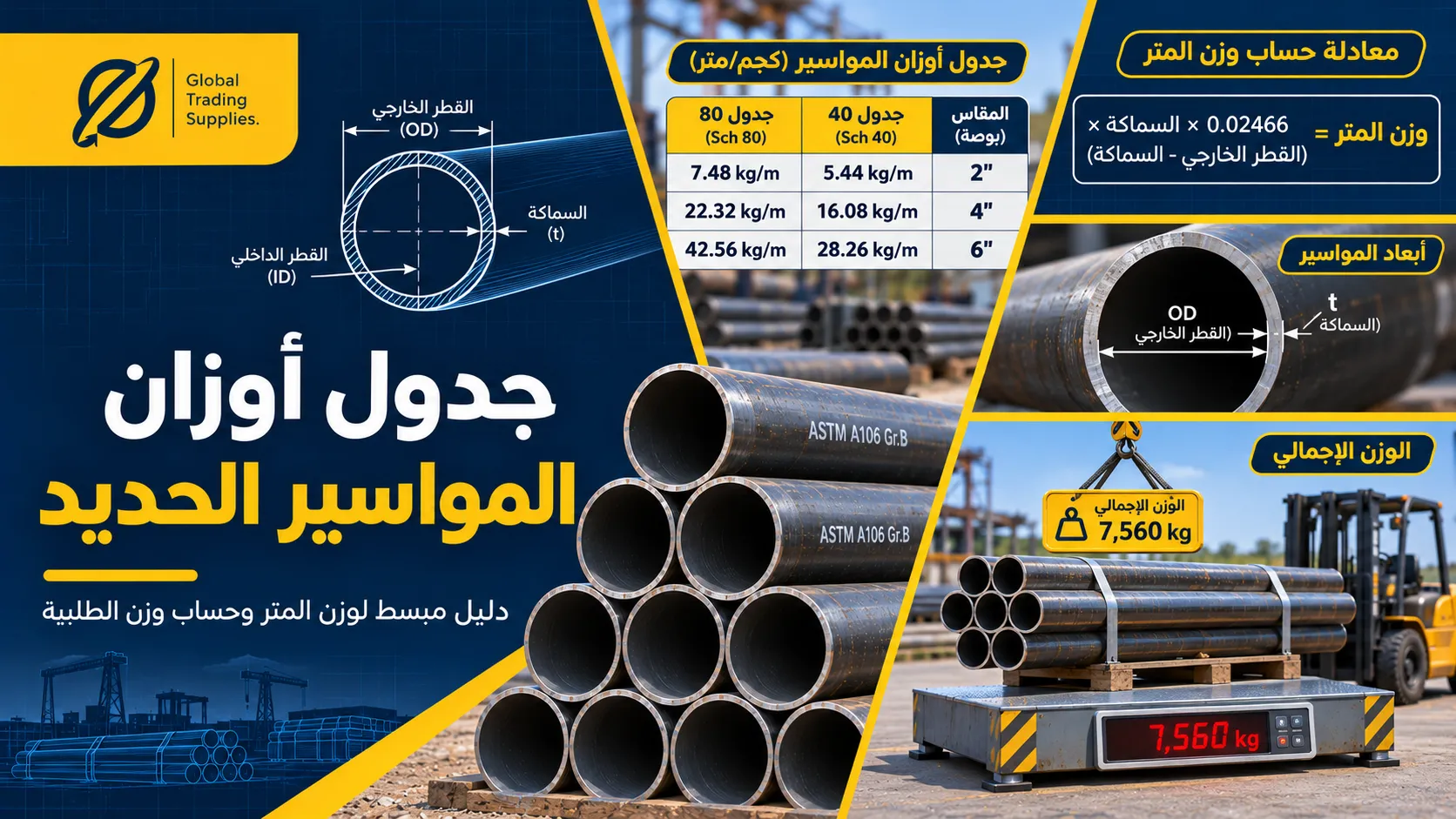
To estimate theoretical weight from diameter and wall thickness, consult the steel pipe weight chart.
4. Pressure and Temperature
Review design and operating conditions and the ratings of every component in the line, then check the selected product against the code and specification. Manufacturing method alone does not establish the allowable operating pressure.
For the technical criteria used to select the correct pipe, see our guide to choosing pipes by operating pressure.
5. Conveyed Medium
Identify the liquid or gas being conveyed and confirm the material’s suitability, along with any linings or corrosion protection needed under the project requirements and service conditions.
6. Codes and Certificates
Check the product standard, tests, mill and origin certificates, and required approvals. Specify any additional documentation before requesting a quotation.
Seamless Carbon Steel Pipes and Fittings from GTS
COMPANY helps you source seamless carbon steel pipes and piping accessories for engineering and industrial projects in Egypt.
Available products include pipes of Ukrainian, Russian, and Chinese origin, as well as threaded fittings, high-pressure forged fittings, seamless butt-weld fittings, and flanges. You can submit your bill of quantities to inquire about product availability, technical documents, and delivery schedules.
Each line item should be reviewed against its standard, grade, size, wall thickness, and required quantity. This helps engineers, contractors, and procurement teams prepare clear requests and assess supply quotations.
Conclusion
Understanding the difference between seamless and welded pipes helps project teams interpret purchase items and review the manufacturing method, inspection requirements, and documentation for each product.
The correct choice ultimately depends on the standard, material, dimensions, operating conditions, and applicable code. Accurate bill-of-quantities data also makes it easier to compare quotations and receive the products specified for the project.
Frequently Asked Questions
What is the difference between seamless and welded pipes?
Seamless pipes are formed without a weld seam in the pipe body. Welded pipes are produced by forming flat steel and joining its edges, with inspection requirements varying according to the applicable standard.
Are seamless pipes always better than welded pipes?
The suitable type depends on the project’s design, code, material, wall thickness, and operating conditions. Either type may be used when permitted by the specification and when its acceptance requirements are met.
How can I tell whether a pipe is seamless?
Check the product identification markings, mill test certificate, and product description. Appearance alone is not sufficient to establish the manufacturing method.
Can seamless pipes be welded during installation?
Yes. A seamless pipe can be welded to a fitting or flange under an approved welding procedure and the project’s material requirements, because “seamless” describes how the pipe body was manufactured.
Can welded and seamless pipes meet the same standard?
Some standards cover both types, such as products within ASTM A53. Other standards specify a particular manufacturing method, so the product type and grade must be checked.
What determines the price of seamless pipes?
Pricing depends on material, grade, size, wall thickness, length, standard, quantity, origin, documents, delivery terms, and product availability at the time of inquiry.