


Industrial project bills of quantities may include pipes with the same nominal size but different wall thicknesses. This becomes clear when comparing Schedule 40 and Schedule 80 specifications: the selected schedule affects pipe weight, internal diameter, preparation requirements, quantities, and procurement costs.
Engineers, contractors, and procurement teams need to understand the differences between Schedule 40 and Schedule 80 pipes before approving purchase orders or comparing quotations. This guide explains what each schedule means and how wall thickness affects pipe dimensions.
Schedule 40 vs. Schedule 80 Pipes: Key Differences
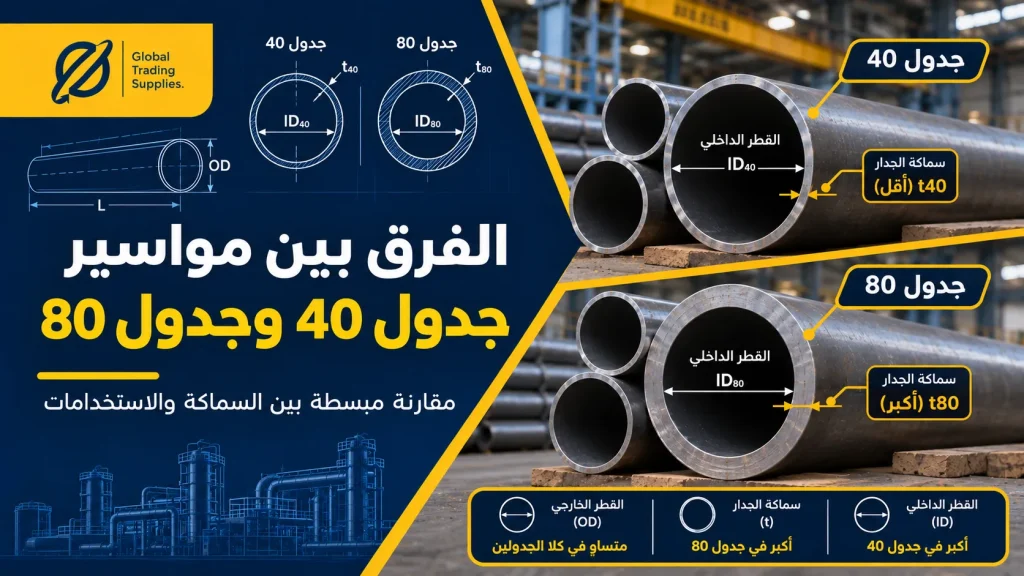
The main difference between Schedule 40 and Schedule 80 pipes is wall thickness. When two pipes have the same nominal size and belong to the same dimensional series, Schedule 80 has a thicker wall, while their nominal outside diameters remain the same.
The thickness difference changes the internal diameter and theoretical weight per metre. The following comparison highlights the information project teams need to review:
| Comparison point | Schedule 40 pipes | Schedule 80 pipes |
|---|---|---|
| Wall thickness | Thinner for the same nominal size within the stated series | Thicker for the same nominal size within the stated series |
| Nominal outside diameter | Determined by nominal pipe size | Same as Schedule 40 for the same size |
| Approximate inside diameter | Larger because the wall is thinner | Smaller because the wall is thicker |
| Theoretical weight | Lower for the same size and material | Higher for the same size and material |
| Application selection | Based on design calculations and specifications | Based on design calculations and specifications |
| Cost | Depends on product, quantity, and supply terms | Affected by increased steel weight and supply requirements |
What Is Pipe Schedule?
A pipe schedule is a designation for a series of wall thicknesses associated with different nominal pipe sizes within a specified dimensional standard. It appears in material lists and purchase orders as SCH 40, SCH 80, and similar designations.
The schedule number does not represent a fixed thickness in millimetres. For example, the actual wall thickness associated with Schedule 40 changes with nominal pipe size, so procurement specifications must state both the size and the schedule.
To check outside diameters and wall thicknesses for different nominal sizes, see our steel pipe size chart.
The required dimensional standard must also be specified alongside the product specification and material grade so the supplier can identify the correct item and prepare the relevant documentation.
What Does Schedule 40 Mean in Practice?
Schedule 40 identifies one series of pipe wall thicknesses. The exact thickness is taken from the applicable dimensional table for the nominal size, while the product specification and material grade determine the complete pipe description.
Schedule 40 seamless pipes are included in procurement requirements for engineering and industrial projects where the specifications permit their use. Pipe lengths, end preparations, country of origin, and documentation requirements may differ between projects.
Schedule 40 does not, by itself, identify a manufacturing process: it may apply to seamless or welded products under the relevant specification. Nor does it represent a material grade or an approval certificate.
For a closer look at manufacturing methods and their characteristics, read our guide to the differences between seamless and welded pipes.
What Are Schedule 80 Pipes?
Schedule 80 is another wall-thickness series. For the same nominal size within the dimensional series being compared, Schedule 80 has a thicker wall than Schedule 40.
Schedule 80 pipe orders must specify the product standard, material grade, lengths, and end preparation. The requirements for associated fittings and flanges must also be reviewed.
The appropriate schedule is determined by design calculations and project requirements. A specified schedule should not be substituted without review and approval by the responsible engineer and approving authority.
Schedule 40 vs. Schedule 80 Wall Thickness Comparison
Comparing a single nominal size shows the differences between Schedule 40 and Schedule 80 without confusing wall-thickness effects with changes in pipe size. The following example uses a 1-inch carbon steel pipe:
| Measurement | Schedule 40 | Schedule 80 |
|---|---|---|
| Nominal outside diameter | 33.4 mm | 33.4 mm |
| Nominal wall thickness | 3.38 mm | 4.55 mm |
| Approximate nominal inside diameter | 26.64 mm | 24.30 mm |
| Approximate theoretical weight per metre | 2.50 kg | 3.24 kg |
| Approximate theoretical weight of a 6 m length | 15.00 kg | 19.44 kg |
How Pipe Schedule Affects Internal Diameter and Flow
Increasing wall thickness reduces the internal opening when the nominal outside diameter stays the same. This makes the differences between Schedule 40 and Schedule 80 particularly important when reviewing pipeline hydraulic calculations.
Flow velocity and friction losses depend on internal diameter, flow rate, fluid properties, pipe length, and fittings. The designer considers these factors when selecting pipe size and wall thickness.
Schedule 40 should not be replaced with Schedule 80 simply because the outside diameters are equal. The resulting change in internal diameter and its effect on the system must be evaluated and approved in the project calculations.
To distinguish pipe size designations from physical dimensions, see the difference between nominal and outside pipe diameters.
Schedule 80 Pressure Rating
A thicker wall can provide additional pressure resistance when material, nominal size, temperature, and other comparison conditions are the same. However, Schedule 80 does not have one universal pressure rating. The allowable operating pressure depends on several factors reviewed by the design engineer:
1. Material Grade
Steel properties vary by specification and grade. Product data must be checked against the material values used in the pipeline design.
2. Operating Temperature
Temperature affects material properties and service limits, so design temperatures must be considered alongside the required pressure.
3. Corrosion Allowance and Manufacturing Tolerances
The design establishes the corrosion allowance and any reduction in wall thickness permitted by manufacturing tolerances, then checks the available thickness under the applicable code.
4. Joint Types and Components
Flanges, fittings, and valves require ratings suitable for the operating conditions. Meeting the requirements for the pipe alone is not enough to approve the entire piping system.
5. Applicable Design Code
The code and service conditions determine how wall thickness, pressure, and related factors are assessed. The final selection relies on the responsible engineer's calculations.
For a clearer understanding of pressure, wall thickness, and design requirements, read our guide to selecting pipes according to operating pressure.
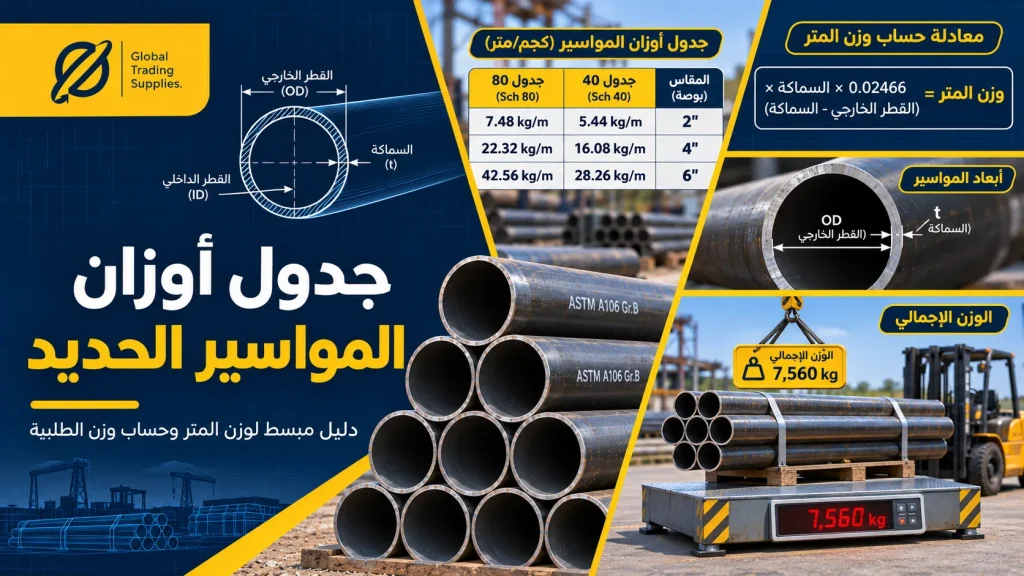
How Pipe Schedule Affects Weight and Procurement
The difference between Schedule 40 and Schedule 80 is reflected in shipment weight. A thicker wall means more steel per metre when nominal size, material, and length are otherwise the same.
Theoretical pipe weights help estimate transport, lifting, and storage requirements, particularly for bills of quantities involving large diameters or multiple lengths. Site teams must also check handling arrangements against the shipment's actual weight.
Quotations should clearly state whether pricing is based on metres, pieces, or tonnes. Pipe lengths, quantities, and transport terms must then be aligned before comparing suppliers.
Final shipment weights should be reviewed against manufacturer documents and contract terms because tolerances, actual lengths, coatings, and accessories can affect total weight.
To estimate theoretical weight by diameter and wall thickness, consult our steel pipe weight chart.
How Pipe Schedule Affects Fittings and Flanges
Selecting connections requires more than checking outside diameter. The fact that Schedule 40 and Schedule 80 pipes share a nominal outside diameter does not make every fitting automatically suitable for both.
Butt-weld fitting wall thickness, end preparation, and compatibility with the pipe must be checked against the specification and design. Flange selection also requires the type, material, pressure class, and facing to be stated.
The change in internal diameter matters when checking a weld-neck flange bore or preparing fitting ends. The required schedule must therefore be recorded for each item, together with any project-specific requirements.
The suitability of threaded or grooved connections depends on pipe thickness, product type, manufacturer instructions, and the applicable code. Components must be approved before a purchase order is issued.
Typical Schedule 40 Pipe Applications
Schedule 40 pipes are used in engineering and industrial applications where the project specification permits them. Material grades and testing requirements vary with the pipeline's purpose. Examples include:
1. Electromechanical Systems
Specified Schedule 40 products may be used in certain mechanical services within facilities. The type, dimensions, and connection method depend on the approved drawings and operating conditions.
2. Fire Protection Systems
Schedule 40 pipes may be specified for certain fire protection networks. Before procurement, the pipe type, specification, documents, and any required product and size approvals must be reviewed.
For materials and specifications suitable for fire protection systems, see our guide to types of pipes used in fire protection networks.
3. Industrial Utility Lines
Schedule 40 steel pipes are used in some factory utility lines. Their suitability depends on the conveyed medium, material grade, and design pressure and temperature.
4. Infrastructure Projects
Specified products may be used in certain infrastructure projects. Protective systems, installation methods, and fittings must be reviewed for each pipeline's requirements.
Schedule 80 Pipe Applications
Schedule 80 pipes are specified where project calculations and specifications require the wall thickness associated with this schedule. They may be used in industrial pipelines or sections of systems with different design requirements.
The responsible engineer determines suitability after considering material, temperature, pressure, the conveyed medium, and the applicable code, including whether thickness is driven by operating conditions, corrosion allowance, or connection requirements.
The bill of quantities must explicitly state Schedule 80. Nominal size and country of origin alone do not establish the wall thickness on which the quotation is based.
How to Select the Right Seamless Pipes
Selecting seamless pipes begins with the approved drawings and specifications, followed by a review of product data and supply terms. The steps below help prepare a request that meets project requirements:
1. Review the Design Item
Confirm the nominal size, schedule, product specification, and material grade shown in the material list, including any required manufacturing method.
2. Define Inspection Requirements
Review mill test certificates, origin details, and any additional reports or approvals required by the project, then include them in the request for quotation.
3. Calculate Lengths and Quantities
Specify piece counts, acceptable lengths, and total metres for each size. Note any required fixed lengths stated in the bill of quantities.
4. Match Fittings and Flanges
List fittings and flanges as separate items, specifying their sizes, materials, standards, wall thicknesses, or pressure ratings as applicable.
5. Check Product Availability
Ask about available origins, delivery dates, and supporting documents, and obtain technical approval for any proposed alternative before including it in the purchase order.
Request Seamless Pipes for Your Project from GTS
For engineering and industrial projects in Egypt, Global Trading Supplies (GTS) accepts inquiries for seamless carbon steel pipes and piping accessories.
The company offers pipes of Ukrainian, Russian, and Chinese origin, along with threaded fittings, butt-weld fittings, and flanges. Engineers, contractors, and procurement professionals can send their bill of quantities to inquire about available sizes, schedules, technical documents, and delivery dates.
Each quotation item is reviewed for the required schedule, product standard, material grade, quantities, and related fittings, subject to availability.
Conclusion
Understanding the differences between Schedule 40 and Schedule 80 helps project teams review wall thickness, internal diameter, weight, and fitting requirements, then record accurate specifications in bills of quantities and purchase orders.
The appropriate schedule depends on the design, product specification, material, and operating conditions. Any proposed change requires technical review and approval before procurement or installation.
Frequently Asked Questions
What Is the Difference Between Schedule 40 and Schedule 80 Pipes?
For the same nominal size within the applicable dimensional series, Schedule 80 has a thicker wall, resulting in a smaller internal diameter and a greater theoretical weight.
Do Schedule 40 and Schedule 80 Pipes Have the Same Outside Diameter?
For the same nominal size within the specified dimensional series, the nominal outside diameter remains the same, while wall thickness and the internal opening differ.
Can Schedule 80 Withstand Twice the Pressure of Schedule 40?
No. The schedule number does not indicate a fixed pressure ratio. Allowable pressure is evaluated using material, size, wall thickness, temperature, design code, and service conditions.
Can Schedule 40 Pipes Be Replaced with Schedule 80?
Any substitution requires technical review and approval, including an assessment of changes to internal diameter, weight, connections, and design requirements before procurement.
Do Welded Fittings and Flanges Change with Pipe Schedule?
Fittings and flanges may require a review of wall thickness, end preparation, internal bore, and component ratings in accordance with the approved design and specifications.
Are Schedule 40 and Schedule 80 Available in Both Seamless and Welded Pipes?
Seamless and welded products are manufactured in different wall-thickness schedules. Availability of a particular size and schedule depends on the product standard, manufacturer, and stock at the time of inquiry.