On this page
- Differences Between Black and Galvanized Steel Pipes
- What Is the Difference Between Black and Galvanized Interpipe Pipes?
- What Are Black Steel Pipes?
- What Are Galvanized Steel Pipes?
- Galvanizing vs. Pipe Manufacturing Method
- Applications of Galvanized Steel Pipes
- Applications of Black Steel Pipes
- Specifications for Black and Galvanized Pipes
- Black or Galvanized: Which Should You Choose?
- Joining Methods for Black and Galvanized Pipes
- Request Seamless Pipes and Fittings for Your Project from GTS
- Conclusion
- Frequently Asked Questions
Engineering project bills of quantities may specify both black steel pipes and galvanized pipes. The two products can share the same size and manufacturing method while requiring different surface finishes for individual lines. Engineers, contractors, and procurement teams therefore need to review each pipe’s description and supporting documents before approving a purchase order.
The main difference between black and galvanized steel pipes lies in the surface condition, protective coating, and suitability for the operating environment. This article explains their key differences, characteristics, applications, and the specifications to review before purchasing.
Differences Between Black and Galvanized Steel Pipes
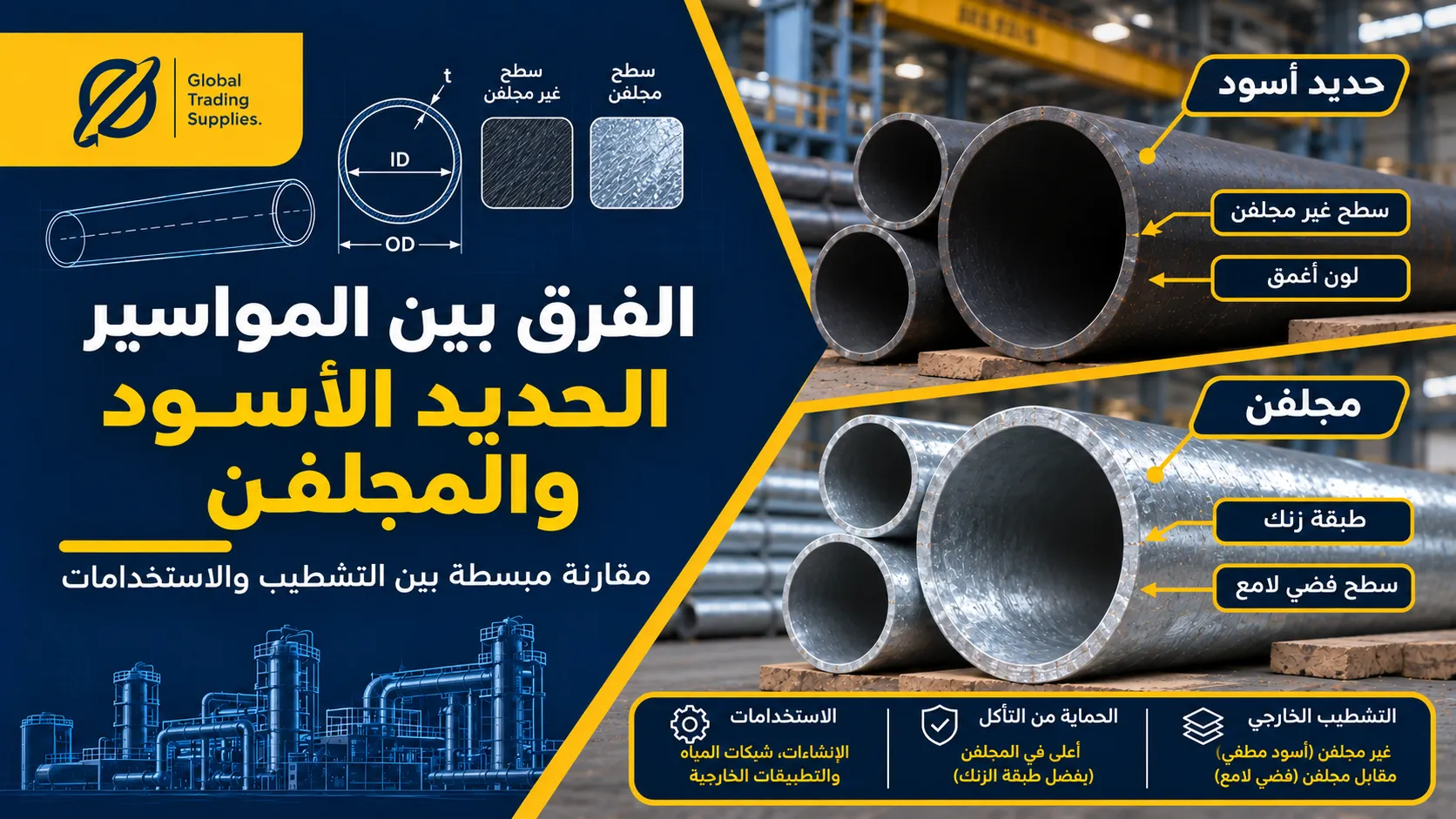
The fundamental difference between black and galvanized steel pipes is the surface finish. Black pipes are not galvanized, whereas galvanized pipes have a zinc coating applied to protect the steel surface in accordance with the relevant product specification. The table below compares the two before the project bill of quantities is reviewed in detail:
| Comparison Point | Black Steel Pipes | Galvanized Steel Pipes |
|---|---|---|
| Surface finish | Ungalvanized steel, supplied bare or with a temporary protective coating | Steel coated with zinc according to the galvanizing method and specification |
| Surface protection | Painting or other protection is specified according to the service environment | Zinc provides protection to steel under suitable conditions |
| Manufacturing method | Can be seamless or welded | Can be seamless or welded, depending on the product |
| Applications | Determined by the specification, design, and installation environment | Determined by the specification, design, and compatibility of the zinc coating |
| Fittings | Material, dimensions, and finish are checked against the piping system | Fitting finishes and joining methods are checked for compatibility with the system |
| Cost | Depends on the specification, dimensions, origin, and supply terms | Also affected by the cost and requirements of galvanizing |
On smaller screens, swipe the table horizontally to see all columns.
What Is the Difference Between Black and Galvanized Interpipe Pipes?
For Interpipe products, the difference between the black and galvanized versions relates to the surface finish of the specific pipe. “Black” identifies an ungalvanized pipe, while “galvanized” indicates a zinc coating applied under the applicable specification and approved manufacturing or finishing process.
When ordering either product, the team must review the actual item details, including the manufacturing method, pipe specification, material grade, wall thickness schedule, and country of origin. If galvanizing is required, its specification and the extent of surface coverage must also be checked.
A brand name or the pipe’s appearance alone does not confirm that a galvanized version is available or that it meets project requirements. Always confirm the exact product and request its documents before approving supply.
What Are Black Steel Pipes?
Black steel pipes are steel pipes without a galvanized zinc coating. Their dark appearance may result from the surface condition after manufacturing, and some grades are supplied with oil or varnish for temporary protection during storage and transportation.
A temporary protective layer is different from the permanent coating system specified for the project. The required surface condition should therefore be stated when purchasing, particularly when site works involve surface preparation and painting after installation.
Black pipes are manufactured by different methods and come in various material grades, sizes, and wall thicknesses. The product specification and bill of quantities—not color or trade name alone—identify the required pipe.
To learn about the different products and their characteristics, explore our guide to types of steel pipes and their applications.
The required internal and external protection must be assessed based on the conveyed medium and installation location. Depending on the project design and specifications, a line may need paint, a lining, or another form of protection.
What Are Galvanized Steel Pipes?
Galvanized steel pipes are coated with zinc to help protect the steel surface against corrosion under suitable conditions. The coating requirements and extent of coverage vary with the product specification and galvanizing process.
Some pipes are hot-dip galvanized after manufacture, while certain sections are made from pre-galvanized steel. The required method must be specified and its suitability for the intended application verified.
When reviewing a galvanized pipe, determine which surfaces must be coated, how the zinc coating is to be inspected, and how pipe ends are to be prepared—especially where the bill of quantities includes special requirements for joints or cut areas.
The zinc layer reduces direct exposure of the steel in certain conditions, but it does not prevent corrosion in every environment. The conveyed medium, temperature, humidity, and operating requirements must therefore be reviewed before selecting the product.
Galvanizing vs. Pipe Manufacturing Method
Distinguishing galvanizing from the manufacturing method is essential to reading the product description correctly. Galvanizing refers to a surface finish, whereas the terms “seamless” and “welded” describe how the pipe body is formed.
A seamless pipe can be black or galvanized, and a welded pipe can also be black or galvanized, depending on the product specification and available supply options.
Both descriptions should appear on the purchase item when applicable. “Galvanized pipe” alone does not establish whether the body is seamless or welded, just as “seamless pipe” does not identify the surface condition or protective coating.
Understanding this distinction helps prevent comparisons between products that differ in more than one characteristic, even when their names look similar in quotations.
Applications of Galvanized Steel Pipes
Galvanized pipes are used where technical specifications and the installation environment allow them. Compatibility between the zinc coating, the conveyed medium, and the joining method must be assessed before approval. Applications that may appear in project requirements include the following:
1. Certain Exposed Pipework
Some galvanized pipes are used in applications exposed to moisture or weather when the design permits them. Protective requirements are determined by site conditions and the nature of exposure.
Cut areas, joints, and damaged coating locations require treatment under the project procedure and product instructions so that the specified protection is restored after installation.
2. Certain Water Networks
Galvanized pipes are used for specific water applications where the product specification, code, and project requirements permit them. Water characteristics and health requirements for materials in contact with drinking water must be reviewed when potable water is involved.
Galvanizing does not make a pipe automatically acceptable for every water type or temperature. Selection must be based on operating data and the requirements of the responsible authority.
To compare suitable materials for different water applications, see our guide to types of pipes used in water supply networks.
3. Certain Fire Protection Systems
Galvanized grades are used in parts of fire protection systems when accepted by the approved specifications. The product must be suitable for the system type and installation location.
Any listing or approval requirements must be checked against the product certificate, manufacturer, size, and approved scope of use rather than relying solely on the term “galvanized.”
For materials and specifications accepted under project requirements, read our guide to types of pipes used in fire protection systems.
4. Specified Structural Applications
Some galvanized pipes and hollow sections are used in structural work and metal components that require a finish suited to the surrounding environment. The required product is defined by the material specification, loads, and design.
Specifications for structural sections differ from those for pipes intended to convey fluids. One must not be substituted for the other without verifying the specification and intended purpose.
Applications of Black Steel Pipes
Black steel pipes are used in various industrial and engineering projects where the piping specification permits the selected product. The protective system depends on installation location and the conveyed medium. Applications include the following:
1. Fire Protection Systems
Black steel pipes appear in the bills of quantities for certain fire protection systems. The project specifies the manufacturing method, product standard, size, wall thickness, and required documents or approvals.
Fittings, flanges, and specified paints must be reviewed separately so that all network components comply with the approved drawings and material list.
2. Mechanical and Electrical Building Services
Black carbon steel pipes are used in some building mechanical systems. Material grade, wall thickness schedule, and end preparation vary according to the line’s function and operating conditions.
To learn about these pipes and their industrial applications, read our guide to carbon steel pipes and their uses.
The contractor needs to list the pipes and associated components in the bill of quantities and review any specified insulation or coating requirements.
3. Industrial Process and Utility Lines
Selected black steel pipes are used for utility and process lines in industrial facilities. Material compatibility with the conveyed medium, temperature, and pressure must be reviewed against the design.
A suitable protective system is chosen for each line after assessing its internal and external environments. Mill certificates and required inspections must also be reviewed before accepting supply.
4. Certain Gas Lines
Black steel pipes are used in some gas transportation applications where the code and project design allow them. The product specification, joining method, tests, and requirements of the relevant authority must be verified.
The exact product is specified by the line documents; the pipe’s color alone is not evidence of suitability for gas service.
Specifications for Black and Galvanized Pipes
The engineering and procurement teams must review the product specification, material grade, manufacturing method, and finish, then match these details to mill certificates and the purchase order.
Some product specifications cover both black and galvanized grades and may include seamless and welded pipes. The required type, grade, and finish must therefore be stated in the item description rather than relying on the specification number alone.
Where a galvanized product is specified, the galvanizing standard and zinc coating inspection requirements must be checked. The test certificates, origin documents, and any approvals required for each product must also be identified.
Nominal size, wall thickness, length, and end preparation should be recorded separately, because similar descriptions do not guarantee identical dimensions or supporting documents.
Black or Galvanized: Which Should You Choose?
The choice depends on piping design and the nature of the service. Comparing pipe color or price alone is insufficient. The following factors help project teams select the required product:
1. Installation Environment
Identify whether the pipe will be installed indoors, exposed outdoors, or buried, and review the protection required by the project documents. Do not assume galvanizing is suitable for every environment.
2. Conveyed Medium
Review the liquid or gas, its temperature, and its compatibility with the pipe material and any coating in contact with it, in accordance with the specification and code.
3. Joining Method
Specify the required joining method and assess how cutting, threading, or welding affects the finish, including any treatment or protection needed in the affected areas after installation.
4. Project Requirements and Approvals
Match the product to the drawings, material schedule, and requirements of the project owner and consultant. Where certificates of approval are required, verify that they cover the intended application.
5. Total Cost
Compare the cost of pipes, fittings, flanges, preparation, coating, transportation, and necessary maintenance, using equivalent specifications, dimensions, and delivery terms across quotations.
Joining Methods for Black and Galvanized Pipes
The joining method is specified according to the product standard, wall thickness, service conditions, and approved components. It may include welding, threading, flanged joints, or other connections permitted by the project.
For galvanized pipes, installation teams must assess how cutting, threading, or welding affects the zinc layer and specify how affected areas will be repaired in accordance with the standard and product instructions.
To understand the differences in finish, protection, and application requirements, learn about black vs. galvanized threaded pipe fittings.
Welding must be performed by qualified personnel under an approved procedure, with appropriate safety and ventilation precautions. The requirements for restoring protection to the weld area must also be reviewed before the work is accepted.
Comparing black and galvanized pipes also involves specifying compatible fitting and flange finishes, gasket materials, and bolts rather than focusing on the pipe alone.
For joining methods and components suitable for water lines, see our guide to types of water pipe fittings.
Request Seamless Pipes and Fittings for Your Project from GTS
Global Trading Supplies (GTS) accepts orders for seamless carbon steel pipes and piping accessories for engineering and industrial projects in Egypt.
The company’s range includes pipes of Ukrainian, Russian, and Chinese origin, along with threaded fittings, high-pressure forged fittings, seamless butt-weld fittings, and flanges. Engineers, contractors, and procurement teams can send their bill of quantities to inquire about available products and technical documents.
Products requiring a particular finish must be checked for availability, specification compliance, and documentation at the time of inquiry, so that the quotation identifies the product that meets the project’s needs.
Conclusion
Understanding the differences between black and galvanized steel pipes helps teams identify the required finish, assess service conditions and documentation, and prepare procurement requests that specify the manufacturing method, material, dimensions, and related components.
Product selection depends on piping design, the conveyed medium, installation environment, and project specifications. Any proposed substitutions require engineering review and approval before purchase.
Frequently Asked Questions
What is the difference between black and galvanized steel pipes?
Black pipes have no galvanized zinc coating, while galvanized pipes have a zinc layer applied according to the product specification. Each is selected based on project requirements.
Are black steel pipes the same as seamless pipes?
“Black” describes the surface finish, while “seamless” describes how the pipe body is manufactured. A black pipe can therefore be seamless or welded.
Can seamless pipes be galvanized?
Yes. A seamless pipe can be galvanized in accordance with the product specification and project requirements. Both the finish and the manufacturing method must be stated when ordering.
Can black and galvanized pipes be used in fire protection systems?
Certain products may be used in fire protection systems when the applicable specifications and codes allow them, subject to the system type, size, wall thickness, and any required approvals.
Can galvanized steel pipes be welded?
They may be welded when permitted by the specification and project procedures, provided suitable safety, ventilation, and restoration of damaged protective coating are addressed.
Are galvanized steel pipes more expensive than black pipes?
Galvanizing typically adds cost, but the final comparison depends on material, size, wall thickness, specification, origin, quantity, and supply terms at the time of purchase.