On this page
- What Are Seamless Pipes?
- Carbon Steel Pipes and Their Applications
- Properties and Benefits of Seamless Pipes
- Carbon Steel Pipe Specifications
- How to Choose the Right Seamless Pipes
- Do Carbon Steel Pipes Need Corrosion Protection?
- Order Carbon Steel Pipes and Fittings from GTS
- Conclusion
- Frequently Asked Questions
Industrial and engineering projects need pipes whose properties suit each line and its operating conditions. Selection starts with checking the material, standard, temperature, pressure and conveyed medium, followed by pipe size, wall thickness, fittings and the documents required before a purchase order is issued.
Carbon steel pipes and their applications are key considerations for engineers, contractors and procurement teams preparing piping systems for factories and facilities. This article explains what seamless pipes are, their principal applications, properties and benefits.
What Are Seamless Pipes?
Seamless pipes are manufactured without a seam created by joining the edges of a steel strip or plate. They are available in different materials and grades, including the carbon steel pipes GTS supplies for industrial and engineering projects.
Carbon steel describes the pipe material, while seamless describes how the pipe body is manufactured. A complete procurement specification should therefore state the material, manufacturing method, applicable standard, material grade and required dimensions.
To understand the manufacturing methods and characteristics of each type, see our guide to the differences between seamless and welded pipes.
The suitability of a particular pipe for a line must be checked against the design documents and operating conditions. Neither ‘carbon steel’ nor ‘seamless’ alone establishes an allowable operating pressure or temperature.
Carbon Steel Pipes and Their Applications
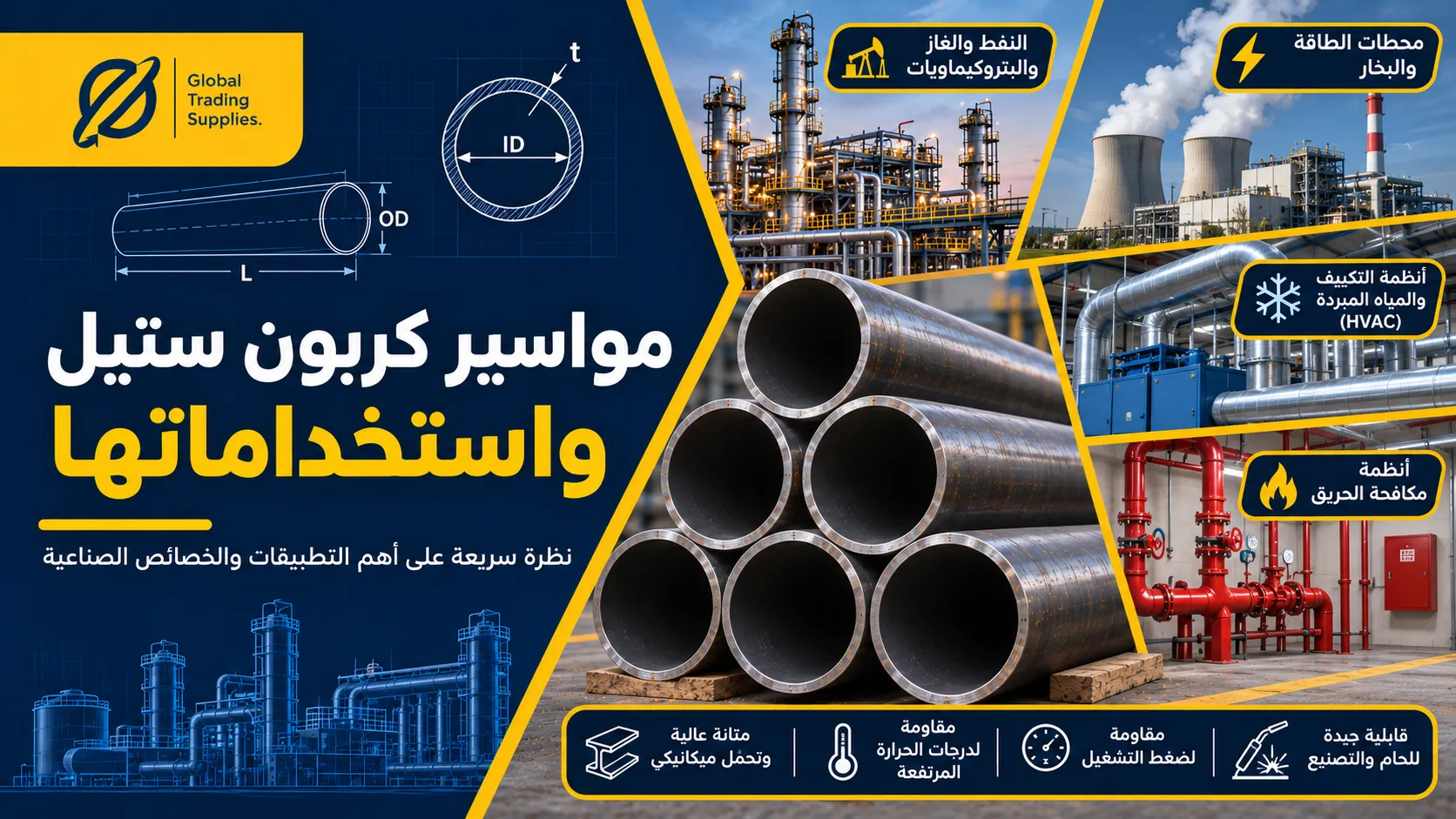
Carbon steel pipes are used in utility lines, industrial projects and infrastructure. The appropriate product depends on the conveyed medium and the requirements of each system. The main applications include:
1. Oil and Gas
Specific carbon steel pipe grades are used in oil and gas pipelines and facilities. Requirements vary with the type of line, the transported product, and the design pressure and temperature.
The project team must review the product specification, material grade, wall thickness and required inspections, as well as the traceability records and mill test certificates to be included in the supply documentation.
Seamless pipes are selected when required by the design. Joining methods and fittings must also be checked against the other components of the line before the purchase order is issued.
2. Petrochemicals
Carbon steel pipes are used in certain utility and process lines in petrochemical plants, subject to a review of material compatibility with the conveyed medium and operating conditions.
Requirements differ from line to line. Some substances or temperatures may call for different materials or protective measures, so the designer must specify the standard, material grade and conditions applicable to each service.
Reviewing carbon steel pipe applications in these facilities also helps identify the fittings, flanges and inspections needed before procurement.
3. Power Generation and Heat
Seamless carbon steel pipes are used in certain steam and utility lines at power facilities when the applicable pipe specification suits the temperature and design conditions.
ASTM A106 is commonly specified for seamless carbon steel pipes intended for elevated-temperature service. The purchase description must also state the grade, size, wall thickness and inspections required by the project.
A qualified engineer must verify operating limits and the applicable design code. A specification number cannot replace line calculations or assembly requirements.
4. Construction and Infrastructure
Carbon steel pipes are used in some mechanical lines and infrastructure projects. Product requirements depend on the line location, installation method and imposed loads.
Buried or weather-exposed lines require a review of the protection systems specified for the project. Requirements for supports, connections and fittings must also be shown on the approved drawings.
The bill of materials should identify each pipe’s intended location, standard, size, wall thickness and quantity so the supplier can review each item against project needs.
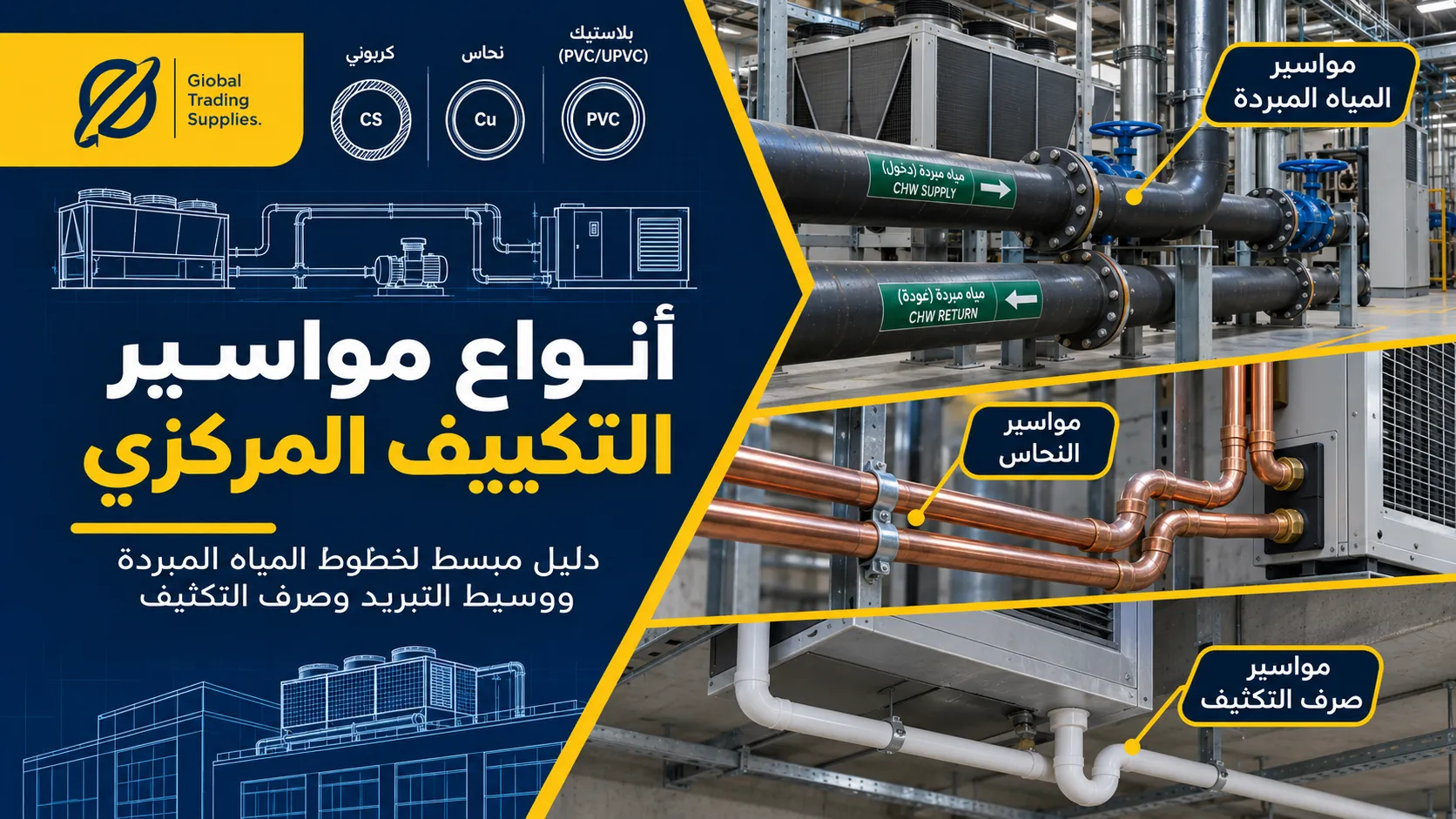
5. Cooling and HVAC
Carbon steel pipes are used in some air-conditioning and refrigeration systems, including service lines specified in the project’s drawings and technical requirements.
Pipe, fitting and flange sizes must be coordinated with connected equipment. External insulation, joining methods and end preparation requirements must also be reviewed.
The pipe is selected based on the service medium, temperature, pressure and specification. A single pipe product should not be assumed suitable for every part of an HVAC system.
6. Fire Protection Systems
Carbon steel pipes are used in parts of fire protection systems when the applicable specifications and code permit the product. Requirements vary with the location of the line within the facility and the system type.
The pipe standard, material grade, size, wall thickness and joining method must be reviewed. Required approval certificates must also be verified for the specific product, manufacturer, size and scope of use.
Fittings and flanges used in the system require their own review to ensure the assembled components comply with the approved specifications.
Properties and Benefits of Seamless Pipes
Carbon steel pipes should be assessed against the properties of the specified product and the project’s requirements. The following points help review seamless pipes before ordering:
1. No Manufacturing Weld Seam in the Pipe Body
The body of a seamless pipe is made without a weld seam formed by joining flat steel edges. This describes the manufacturing method; all other quality and inspection requirements are governed by the applicable specification.
A seamless pipe can still be welded to a fitting or flange during line installation, provided an approved welding procedure and the project’s requirements are followed.
2. Range of Sizes and Wall Thicknesses
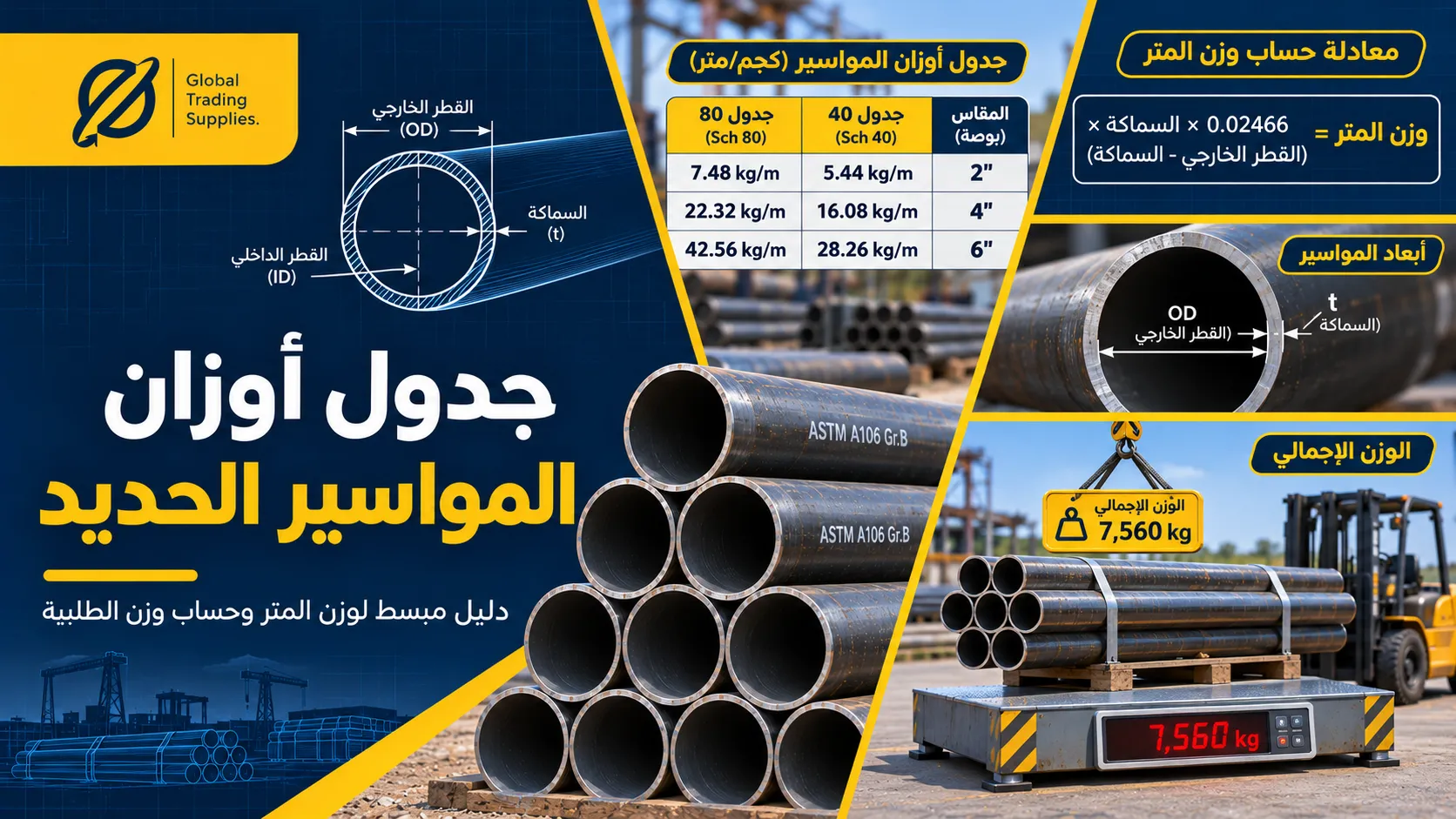
Seamless pipes are available in a range of sizes and wall thicknesses depending on the product standard and manufacturer. Specifying these details helps identify the correct product for each bill-of-quantities item.
To understand how wall thickness affects pipe dimensions and weight, read about the differences between Schedule 40 and Schedule 80 pipes.
Available sizes, schedules and lengths should be confirmed when ordering. An entry in a dimension table does not mean the supplier continuously stocks that size.
3. End Preparation Options
Pipe ends can be prepared to suit installation requirements, including plain or beveled ends. The required end preparation should be stated in the purchase request.
Fittings and flanges must match the specified material, size, wall thickness or rating, and standard so the assembly complies with the approved design.
For specifications of welded fittings used in carbon steel piping, read our guide: What Are ASTM A234 WPB Fittings?
4. Material Traceability
Supplied pipes carry identification markings that help match products to their documentation. Mill test certificates and identification numbers must be checked according to project requirements.
This review allows the quality team to verify the standard, grade and recorded test results for each product before it is accepted for installation.
Carbon Steel Pipe Specifications
Carbon steel pipe specifications vary with the manufacturing method, service conditions and inspection requirements. The applicable standard and material grade must be stated alongside size and wall thickness when preparing a purchase order.
To explore the available product categories, characteristics and uses, see our guide to types of steel pipes.
GTS offers ASTM A106 Grade B seamless carbon steel pipes. ASTM A106 covers seamless carbon steel pipe for high-temperature service. Suitability for each line must be reviewed against its design, code and operating conditions.
Dimensional standards define pipe diameters and wall thicknesses, while product specifications set material, manufacturing and inspection requirements. Neither can replace the other in the bill of quantities.
Actual shipment details and certificates must be checked at delivery. Any additional inspections or certifications required by the project must also be specified before placing the order.
How to Choose the Right Seamless Pipes
Choosing the right carbon steel pipe requires matching the product to the line’s actual design information. The following steps help engineers and procurement teams prepare an appropriate request:
1. Define the Application
Identify the line’s function, conveyed medium and installation location, then review project requirements for the material, manufacturing method and protective measures.
2. Review Material and Grade
Match the pipe specification and material grade to the drawings and bill of materials, and verify the documents required to demonstrate product conformity before approval.
3. Confirm Design Conditions
Check design pressure and temperature, the conveyed medium and the applicable code. Wall thickness and pipe type must then be approved based on the responsible engineer’s calculations.
4. Specify Dimensions and Quantities
State the nominal size, wall thickness or schedule, length and quantity for each line item, and specify whether fixed or alternative lengths are acceptable.
5. Check Fittings and Flanges
Identify the required fitting and flange types, sizes, materials and standards, then verify their compatibility with the pipes and approved joining method.
For flange types and how to select them, see our guide to flange types and their applications.
6. Request Technical Documentation
Include mill test certificates, certificates of origin and any additional reports or approvals in the request for quotation so the supplier can clarify which documents are available for the specified product.
Do Carbon Steel Pipes Need Corrosion Protection?
Carbon steel pipes require an assessment of corrosion risks arising from the conveyed medium and external environment. Depending on the line, the design may specify internal or external protection or a corrosion allowance.
The required treatment differs between an exposed pipe inside a facility, a buried line, and an area exposed to moisture or chemicals. Coating or lining specifications and surface preparation requirements must therefore be checked before installation.
To understand how galvanizing affects pipe protection and applications, see the differences between black and galvanized steel pipes.
The responsible engineering team determines the protection method and its inspection and maintenance requirements. The compatibility of any lining with the conveyed medium must also be verified, especially for drinking-water systems.
Order Carbon Steel Pipes and Fittings from GTS
Global Trading Supplies (GTS) accepts requests for seamless carbon steel pipes and piping accessories for engineering and industrial projects in Egypt.
The company offers pipes of Ukrainian, Russian and Chinese origin, as well as threaded fittings, high-pressure forged fittings, seamless butt-weld fittings and flanges. Engineers, contractors and procurement teams can submit a bill of materials to inquire about available products, technical documentation and delivery times.
Reviewing the bill of quantities before placing an order helps define the sizes, wall thicknesses and fittings needed for each item, along with the certificates and approval requirements of the project.
Conclusion
Carbon steel pipes are used in industrial and engineering projects and utility systems. The right product depends on the line’s purpose, specification, material grade, dimensions and operating conditions.
Accurate bills of quantities and technical documentation help teams review pipes, fittings and flanges before approving procurement and confirm that supplied products match the drawings and installation requirements.
Frequently Asked Questions
What Are Carbon Steel Pipes Used For?
They are used in certain oil and gas lines, industrial utilities, HVAC systems, fire protection networks and infrastructure projects. The right product is determined by each project’s design and specifications.
Are All Carbon Steel Pipes Seamless?
No. Carbon steel describes the material. Carbon steel pipes are available in both seamless and welded forms, and the required manufacturing method must be stated in the purchase specification.
What Does ASTM A106 Grade B Mean?
These are seamless carbon steel pipes manufactured to ASTM A106, Grade B. Their suitability must be reviewed against the line’s operating conditions, design and project requirements.
Can Carbon Steel Pipes Be Used in Fire Protection Systems?
Specified carbon steel pipe products may be used in fire protection systems when permitted by the applicable specifications and code. Product size, wall thickness, documents and required approvals must be reviewed.
Do Carbon Steel Pipes Need Corrosion Protection?
Corrosion risks must be evaluated in relation to the conveyed medium and surrounding environment. The design determines the protection methods, corrosion allowance and inspection requirements for each line.