On this page
- Steel Pipe Weight Chart
- How to Read a Steel Pipe Weight Chart
- How to Calculate Steel Pipe Weight from Diameter and Wall Thickness
- Calculating the Total Weight of a Multi-Size Pipe Order
- Factors That Affect Steel Pipe Weight
- Difference Between Theoretical and Actual Pipe Weight
- Why Estimate Pipe Weights Before Shipping and Installation?
- How to Check Pipe Weights in a Supplier Quotation
- Seamless Pipes to Match Your Project Specifications from GTS
- Frequently Asked Questions
Project calculations begin with a list of the required pipe sizes and lengths. However, preparing a pipe order also requires knowing the weight of the pipes, whether to estimate quantities or plan transportation and handling on site. Pipes of the same nominal size can have different weights when their wall thicknesses differ. Reading a steel pipe weight chart therefore helps produce an estimate that is closer to the project’s actual requirements.
In this article, we explain the weight per linear meter of common carbon steel pipe sizes, how to calculate the weight of an individual pipe and a complete order, and which details engineers and purchasing officers should verify before approving a supply order.
Steel Pipe Weight Chart
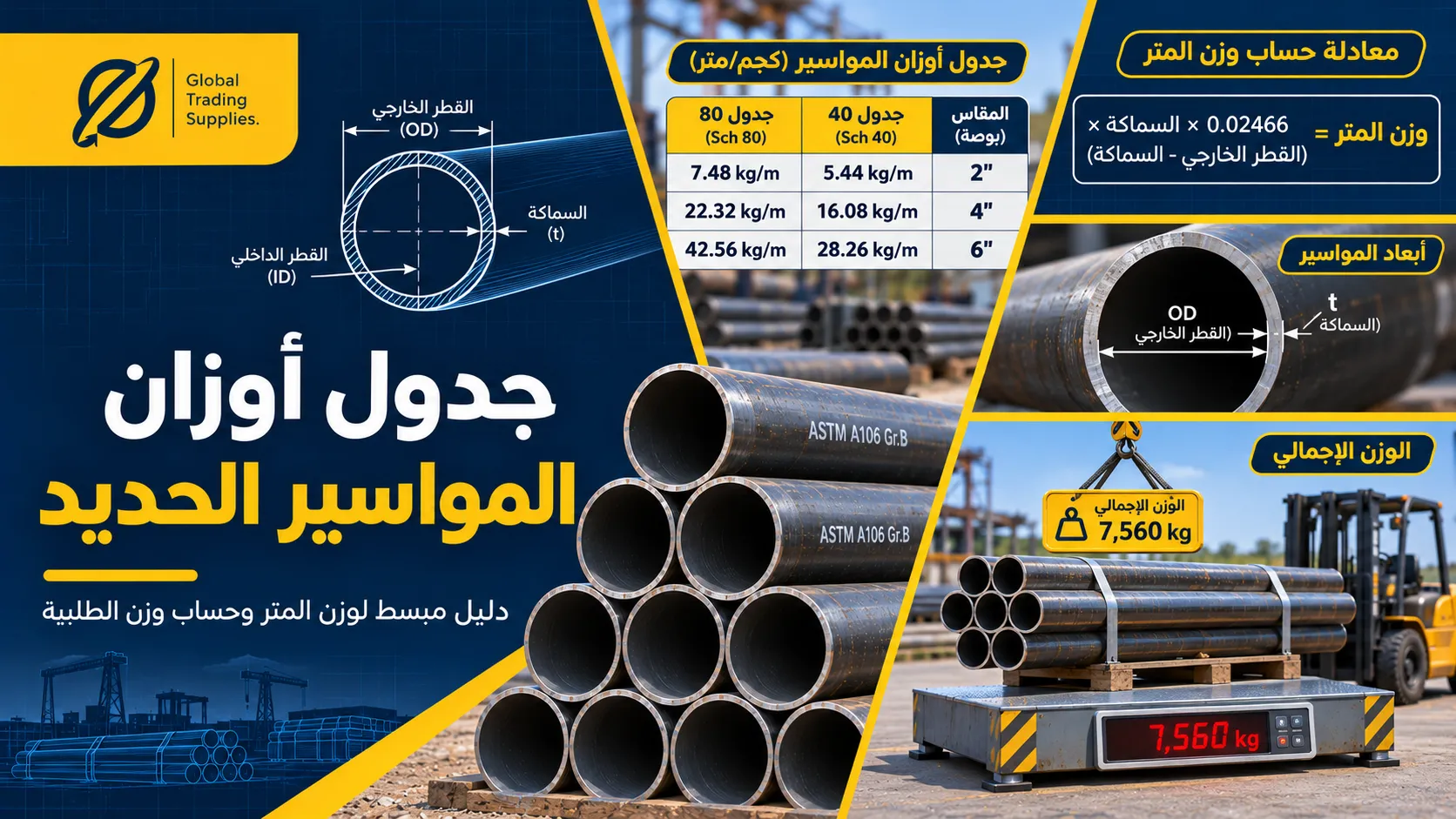
The following steel pipe weight chart shows the approximate theoretical weight per linear meter of round carbon steel pipes based on ASME B36.10M dimensions, for common Schedule 40 and Schedule 80 sizes.
The listed weights apply to plain-end pipes without coating or lining. The weight of a complete pipe is calculated by multiplying the weight per meter by its actual length.
| Nominal pipe size (inches) | Schedule 40 weight (kg/m) | Schedule 80 weight (kg/m) |
|---|---|---|
| 1/2 | 1.27 | 1.62 |
| 3/4 | 1.68 | 2.19 |
| 1 | 2.50 | 3.24 |
| 1 1/4 | 3.39 | 4.46 |
| 1 1/2 | 4.05 | 5.41 |
| 2 | 5.44 | 7.48 |
| 2 1/2 | 8.64 | 11.41 |
| 3 | 11.29 | 15.27 |
| 4 | 16.08 | 22.32 |
| 5 | 21.77 | 30.94 |
| 6 | 28.26 | 42.56 |
| 8 | 42.54 | 64.64 |
| 10 | 60.30 | 96.00 |
| 12 | 79.72 | 132.07 |
On mobile, swipe horizontally inside the table to see all columns.
How to Read a Steel Pipe Weight Chart
To read a steel pipe weight chart, first identify the nominal size and pipe schedule stated in the bill of quantities. Then locate the corresponding weight at the intersection of the correct row and column.
For example, a 2-inch Schedule 40 pipe has an approximate weight of 5.44 kg per linear meter, whereas a 2-inch Schedule 80 pipe weighs approximately 7.48 kg per meter.
To understand why the weight and wall thickness differ between the two schedules, read our guide to the differences between Schedule 40 and Schedule 80 pipes.
Here, the nominal size is the conventional size designation, while the actual outside diameter is used in the weight formula. The chart values represent the weight of one meter, not the weight of an entire pipe length.
How to Calculate Steel Pipe Weight from Diameter and Wall Thickness
The following formula helps estimate the weight per linear meter of a round carbon steel pipe when its outside diameter and wall thickness are known in millimeters:
Weight per meter (kg/m) = 0.02466 × wall thickness × (outside diameter − wall thickness)
The formula uses an approximate steel density of 7,850 kg/m³ and estimates the pipe weight without adding coatings or fittings.
As a practical example, consider a 4-inch Schedule 40 pipe with an outside diameter of 114.3 mm and a nominal wall thickness of 6.02 mm:
Weight per meter = 0.02466 × 6.02 × 108.28 = approximately 16.07 kg
A small difference may appear between the formula result and the weight shown in the steel pipe weight chart because dimensions or weights are rounded. Supplier data should therefore be checked before preparing final calculations.
The calculation must use the outside diameter in millimeters. Entering the nominal size of 4 directly into the formula would produce an incorrect result.
To avoid mistakes when calculating dimensions and weights, learn about the difference between nominal pipe diameter and outside diameter.
Calculating the Total Weight of a Multi-Size Pipe Order
Many project bills of quantities include several pipe sizes, each with a different quantity. Calculate the weight of each group separately before adding the totals. For example, assume the following order consists of Schedule 40 pipes, each 6 meters long:
| Pipe size | Quantity | Approx. weight per meter | Approx. group weight |
|---|---|---|---|
| 2 inches | 20 pipes | 5.44 kg | 652.80 kg |
| 4 inches | 10 pipes | 16.08 kg | 964.80 kg |
| 6 inches | 5 pipes | 28.26 kg | 847.80 kg |
| Total | 35 pipes | — | 2,465.40 kg |
On mobile, swipe horizontally inside the table to see all columns.
The approximate theoretical weight is therefore 2.465 metric tons, obtained by dividing the total weight in kilograms by 1,000.
This result covers the pipes only. The weights of flanges, fittings and packaging must be added when estimating the total shipment load, if they will be shipped with the same order.
Factors That Affect Steel Pipe Weight
The weights listed in a steel pipe weight chart depend on several inputs. Changing any of them affects the figure used by the project team to estimate quantities. The main factors are as follows:
1. Outside Diameter
Weight per meter increases as the outside diameter increases, provided wall thickness remains constant, because the cross-sectional area of steel becomes larger.
Using the correct outside diameter helps ensure the weight formula is applied accurately, especially when comparing pipes with different nominal size designations.
2. Pipe Wall Thickness
For a fixed outside diameter, increasing wall thickness increases the amount of steel per linear meter. This explains why Schedule 40 and Schedule 80 pipes of the same nominal size have different weights.
Wall thickness should first be selected according to the pipeline design, operating requirements and applicable specification. Weight is then calculated using the thickness approved for the project.
3. Pipe Length
The total weight of a pipe is proportional to its length. Increasing its length increases its weight, even when nominal size and wall thickness stay the same.
When a shipment includes different lengths, it is preferable to use the actual total length for each pipe size instead of assuming that all pipes have the same length.
4. Coatings and Linings
Some pipes are supplied with an external protective coating or an internal lining suited to their service conditions. These layers may add weight compared with bare pipes.
The additional weight depends on the protective material, its thickness and the coated area. Estimating the coated pipe weight therefore requires product or supplier information.
5. End Preparation and Accessories
A pipe with threaded ends or an attached coupling can weigh differently from a plain-end pipe. End preparation and accessories also affect the final weight.
These details should be recorded when comparing the values in a steel pipe weight chart with the weights shown in supply documents.
Difference Between Theoretical and Actual Pipe Weight
Theoretical weight is calculated using nominal dimensions and an assumed steel density. It is useful for preliminary bills of quantities and transportation planning.
Actual weight is the measured weight of the pipes. It may differ from the theoretical value because of manufacturing tolerances permitted by the specification, actual length variations, or coatings and end preparations not included in the calculation.
For a large order, small differences in the weight of individual pipes may add up and affect the total shipment weight. Reviewing the technical specification, weighing method and acceptance terms therefore helps explain any differences found on delivery.
The purchase documents should also state the agreed basis of weight, whether theoretical or actual, as specified in the quotation and contract.
Why Estimate Pipe Weights Before Shipping and Installation?
A steel pipe weight chart helps project teams plan shipping and site arrangements early and select appropriate handling equipment based on pipe lengths and weights. Weight estimates are useful at several stages:
1. Shipment Planning
Calculating the weight of each group and the entire order helps determine a suitable mode of transport and check permissible load limits, while accounting for pipe lengths and how they will be secured during transport.
The estimated shipment load must also include the weight of restraints, packaging and accessories carried on the vehicle.
2. Selecting Lifting Equipment
The approximate weight of an individual pipe or bundle helps determine lifting and handling requirements on site, particularly for larger sizes or long pipes that require suitable lifting points.
The lifting equipment’s rated capacity and the method used to rig the load must be checked against the site’s arrangements and approved safety procedures.
3. Organizing Storage
Estimating bundle weights helps arrange storage areas and choose suitable supports. Separating pipe sizes and wall thicknesses also makes it easier to identify materials when they are issued for installation.
An organized order also allows teams to reach the required pipes without repeatedly moving other bundles.
4. Checking Installed Pipeline Loads
The weight of an empty pipe is one component of support-load calculations. The complete installed pipeline also includes the weight of the fluid, flanges, valves, insulation and any additional components.
Operating and test loads should be reviewed according to the project design because the weight of a filled line may differ from the weight of the pipes before installation.
How to Check Pipe Weights in a Supplier Quotation
Comparing a supplier quotation with the bill of quantities helps reveal differences before issuing a purchase order, especially when the order includes multiple sizes and schedules. The following details should be reviewed when comparing quotations:
1. Nominal Size and Schedule
Each item must specify the nominal pipe size and the required schedule or wall thickness. The nominal size alone is not enough to determine the weight per meter or confirm that the pipe matches the bill of quantities.
The required dimensional standard should also be checked so supplier quotations are compared on the same basis.
To check the diameters and wall thicknesses associated with each size, refer to our steel pipe size chart.
2. Material and Manufacturing Specification
The purchase request should state the pipe material, applicable specification and required grade. The manufacturing method must also be identified when the project specifies seamless pipes.
Providing these details helps confirm whether a product is suitable for its intended service, rather than choosing a pipe based on weight alone.
3. Lengths and Quantities
Quantities should be checked in meters or number of pipes, with the length of each pipe or the acceptable length range specified. Differences in length affect both the number of pipes and the total weight.
When comparing several quotations, it is preferable to convert quantities to a common unit to make differences between line items clear.
4. Weight Basis and Pricing Unit
The purchasing officer should confirm whether the quoted weight is theoretical or actual and check the pricing unit used, whether per meter, per pipe or by weight, as agreed.
Knowing the calculation basis makes it possible to compare quotation values without confusing weight per meter with the weight of the entire order.
5. Pipe Condition at Delivery
Review the end preparation, coating and any other required finishing, along with documents and material or test certificates specified for the project.
Also verify whether the weights of fittings and flanges are included in the quoted total or listed as separate items.
Seamless Pipes to Match Your Project Specifications from GTS
Industrial projects and piping networks require accurate supply information, from nominal sizes and wall thicknesses to material specifications and required quantities. Global Trading Supplies (GTS) supplies seamless carbon steel pipes, along with fittings and flanges, for contracting, electromechanical and industrial projects.
To learn about the characteristics of these pipes and their industrial applications, read our guide to carbon steel pipes and their uses.
Prepare and send your required material list to request a quotation matching your project specifications. Include the required sizes, lengths and grades so the supply details can be reviewed accurately.
Frequently Asked Questions
How much does one meter of 2-inch steel pipe weigh?
A 2-inch Schedule 40 carbon steel pipe weighs approximately 5.44 kg per meter in theory, while a 2-inch Schedule 80 pipe weighs approximately 7.48 kg per meter, excluding coatings and accessories.
How much does a 6-meter length of 4-inch steel pipe weigh?
A 6-meter length of 4-inch Schedule 40 pipe has a theoretical weight of approximately 96.48 kg. A Schedule 80 pipe of the same length weighs approximately 133.92 kg.
Does steel pipe weight change with wall thickness?
Yes. Weight per meter increases as wall thickness increases for a fixed outside diameter. You therefore need the thickness or schedule number before using a steel pipe weight chart.
How do I calculate the number of pipes in one metric ton?
Divide 1,000 kg by the approximate weight of one pipe to obtain a theoretical estimate. The actual number will depend on measured weight and pipe lengths.
For example, if one pipe weighs approximately 96.48 kg, one metric ton is theoretically equivalent to about 10.36 pipes, or roughly 10 complete pipes without exceeding one metric ton based on theoretical weight.
Do seamless pipes and welded pipes have different weights?
Their theoretical weight per meter is similar when the outside diameter, wall thickness and material density are the same, whether the pipe is seamless or welded. Actual weight may vary due to manufacturing tolerances, specifications and product finishing.
Does the steel pipe weight chart include flanges and fittings?
The chart covers plain-end pipes without flanges or fittings. Accessory weights must therefore be calculated separately when estimating the weight of an order or the loads on a pipeline.